Hire a dedicated Gatsby development team
· Typical ramp to sprint one: 22–30 days
Hire a Gatsby development team through Siblings Software when you need a full pod to own a content site, publisher network, or headless CMS frontend across multiple sprints. This page covers what the pod owns, buyer scenarios, the Static Hydration Test, team composition, monthly USD bands, ramp timeline, comparisons, risks, and FAQs so you can decide whether to contact us.
Gatsby in 2026 means Gatsby 5 incremental builds, GraphQL source plugins tied to Contentful or Sanity, preview webhooks that editors trust, and Core Web Vitals budgets enforced in CI before a template ships. We assemble nearshore pods from Argentina with a tech lead, senior React engineers, CMS integration, QA, and a delivery lead. Engineers we staff have debugged build-time failures, fixed image pipelines, and read the official Gatsby documentation alongside Core Web Vitals guidance. For individual engineers embedded in your squad, see Gatsby staff augmentation; for the parent service line see Gatsby development outsourcing and dedicated development teams.
When evaluating vendors, ask for a live exercise on your CMS shape, published monthly pod bands, and a clear answer on when a dedicated team beats adding individuals. When app routes, auth, or API handlers dominate the roadmap, compare our dedicated Next.js development team page. When the stack mixes frameworks under one delivery lead, see the dedicated web development team offering.
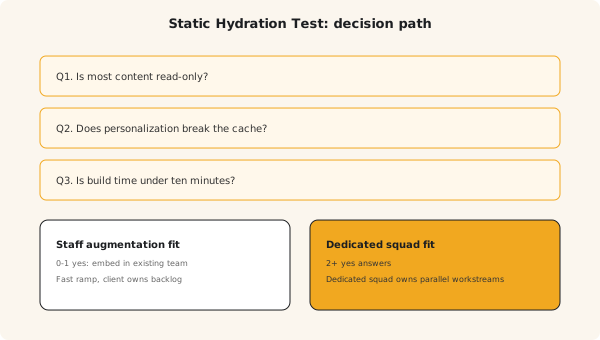
Run the Static Hydration Test before discovery to see whether a pod or staff augmentation fits first.
Prefer numbers before a call? Jump to monthly pod pricing bands for lean, standard, and program tiers.
What a dedicated Gatsby team owns
Sustained pod ownership, not a reprint of the staff augmentation page.
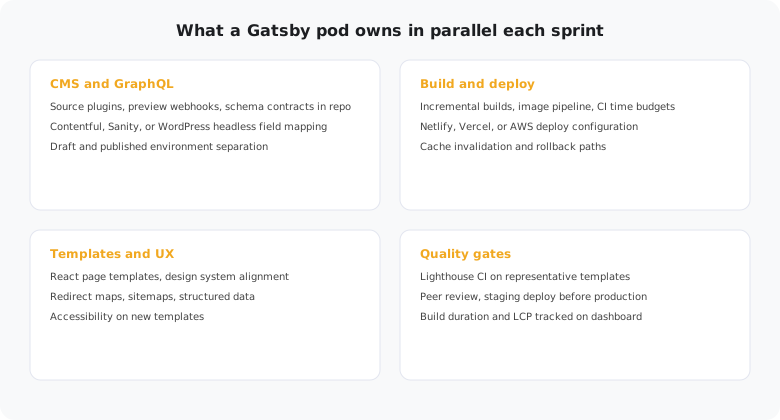
A dedicated Gatsby pod carries parallel tracks that need the same people sprint after sprint: CMS field changes that break GraphQL types, build pipelines that outgrow the CI window, template work tied to a design system, and quality gates editors depend on before a content launch. The diagram below is a schematic of those tracks; your mix depends on site size, CMS complexity, and how much migration work is still open.
CMS integration and GraphQL
Source plugin configuration, preview and draft workflows, schema contracts checked into the repo, and webhook playbooks when Contentful or Sanity fields change. The CMS integration engineer owns the boundary between editorial tools and production builds.
Build pipeline and deploy graph
Incremental builds, image pipelines with modern formats, CI time budgets, cache invalidation rules, and rollback paths on Netlify, Vercel, or AWS. Build surprises surface in discovery, not in sprint three after editorial deadlines slip.
Templates, SEO, and accessibility
React page templates aligned to your design system, redirect maps, sitemap generation, structured data, and accessibility checks on new templates. The pod owns Definition of Done for front-end work, not a ticket queue handed off to QA after code freeze.
Delivery leadership and governance
Sprint planning, standups, stakeholder updates, architecture decision records in your repository, and weekly demos tied to build time and Core Web Vitals on a shared dashboard. Your product owner sets priorities; our delivery lead owns cadence.
Tools we meet most often: Gatsby 5, React, TypeScript, Contentful, Sanity, WordPress headless, Netlify or Vercel deploys, Lighthouse CI, and your existing Git provider. We align with react.dev patterns for component architecture and treat performance budgets as release criteria, not quarterly audit homework.
When companies hire a dedicated Gatsby team
Four buyer shapes cover most discovery calls; your situation may combine two.
Publisher networks with build-time debt
Tens of thousands of pages, nightly builds blocking editorial releases, and ad viewability suffering on slow article templates. A lean pod refactors incremental builds and image handling while keeping the CMS live.
Marketing teams migrating to headless CMS
Moving from WordPress or Drupal to Contentful or Sanity with a Gatsby frontend. The goal is phased cutover, redirect mapping, and preview workflows editors can trust before the old CMS is switched off.
Product marketing with no full-time Gatsby owner
Strong design and backend teams, but nobody owns source plugins, preview environments, or the deploy graph full time. A pod fills the gap while an in-house search runs in parallel.
Documentation portals with CWV pressure
Developer docs or help centers where search ranking and Largest Contentful Paint matter. The pod puts Lighthouse budgets in CI on representative templates and tracks regressions on every pull request.
If you already run sprint ceremonies and only need one or two senior hands, Gatsby staff augmentation is usually faster to start. If scope is fixed and short, see project-based outsourcing.
The Static Hydration Test
A lightweight framework buyers can reuse even if they never hire us.
Most mismatches on Gatsby engagements come from buying a generic React squad for a static-generation program, or staffing augmentation when the backlog needs a delivery lead and QA seat. Before we propose pod size, we score three signals with your content or engineering lead on a thirty-minute call.
- Signal A: build-time fit. If most pages are marketing, docs, or articles with stable URLs, static generation is a strong fit. Heavy per-user HTML at the edge usually points to SSR, client fetch, or a different framework choice.
- Signal B: cache and personalization. If every visitor needs unique HTML, static generation may fight product goals. Map what can stay static before committing team size.
- Signal C: CI and build budget. When full builds exceed your pipeline window, incremental builds, source plugin refactors, and image pipeline work become sprint-zero priorities, not optional optimizations.
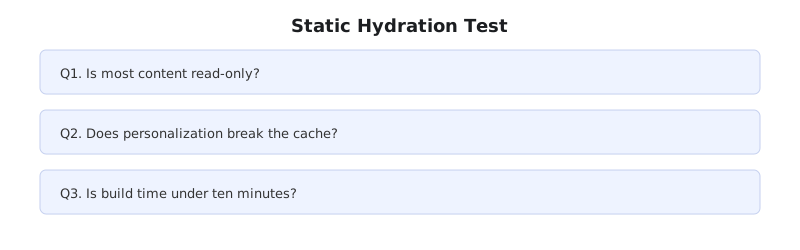
Two or three answers pointing toward sustained ownership usually mean a dedicated pod with delivery lead and QA. Fewer usually mean staff augmentation or a narrower fixed-scope engagement first.
Engagement models and monthly USD bands
Published bands beat "contact us for a quote" when you are budgeting a quarter.
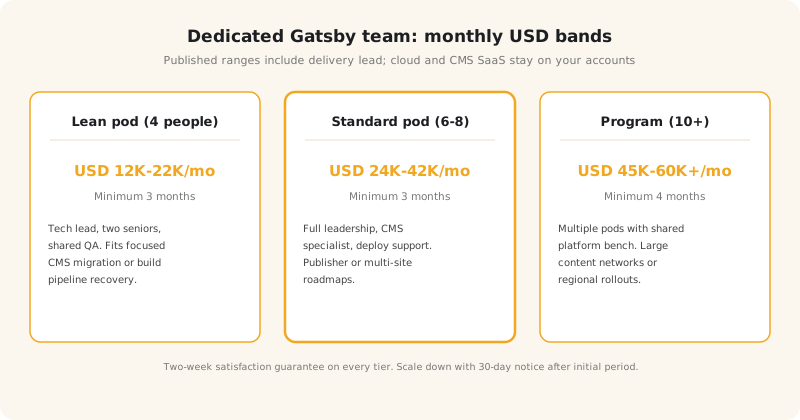
Dedicated Gatsby pods bill monthly within the USD 12,000 to 60,000 band. The point inside the band moves with team size and how much CMS migration or build-pipeline work the site needs.
Lean pod (4 people)
Tech lead, two senior React engineers, shared QA. Strong when the roadmap is focused: incremental build recovery, CMS migration spike, or a single property with steady releases.
Monthly: USD 12,000 to 22,000. Minimum: three months.
Standard pod (6 to 8 people)
Full leadership stack plus CMS specialist and deploy support. Common for publisher networks, multi-locale content, or programs that need QA and delivery leadership inside every sprint.
Monthly: USD 24,000 to 42,000. Minimum: three months.
Program (10 plus people)
Multiple pods with shared platform bench. Covers large content networks, parallel property rollouts, or CMS plus front-end tracks that cannot share one sprint board.
Monthly: USD 45,000 to 60,000+. Minimum: four months.
Every tier includes a two-week satisfaction guarantee. CMS SaaS, hosting, and CDN bills stay on your accounts. Scale down with 30-day notice after the initial period.
First 30 days and ramp timeline
Short, inspectable steps that end with sprint one delivery against an agreed goal.
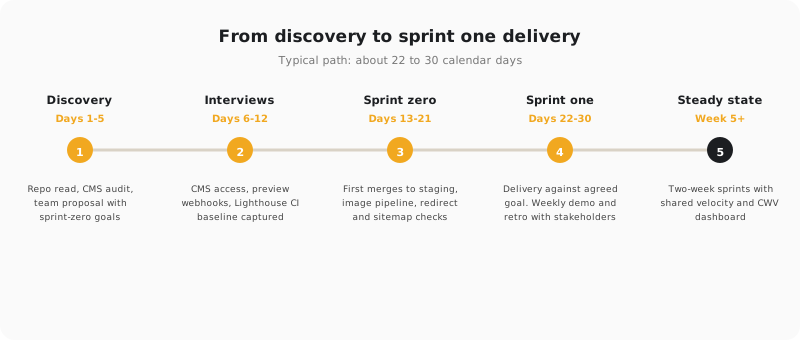
- Discovery (days 1 to 5). Repo and build read, CMS schema audit, Static Hydration Test, written team proposal with sprint-zero goals. We say no on the call when a dedicated pod is the wrong shape.
- Interviews and access (days 6 to 12). Meet pod leads, wire preview webhooks, capture Lighthouse CI baseline, agree Definition of Done for templates and CMS changes.
- Sprint zero (days 13 to 21). First merges to staging, image pipeline configured, redirect and sitemap checks green, GraphQL types aligned to CMS fields.
- Sprint one (days 22 to 30). Delivery against an agreed goal. Weekly demo and retro with your stakeholders. Build duration and LCP tracked on a shared dashboard.
- Steady state (week 5 onward). Two-week sprints with delivery lead reporting, tech lead owning architecture sign-off, and QA inside the sprint alongside feature work.
Dedicated Gatsby team versus staff augmentation, freelancers, or in-house
Each option wins sometimes; pretending otherwise wastes your time.
Staff augmentation
One or two engineers under your engineering manager, roughly USD 4,000 to 9,000 per month per developer nearshore. Wins when you already run sprint rituals and need senior hands on GraphQL or CMS webhooks. See Gatsby staff augmentation.
Freelancers or marketplaces
Win on small template fixes under a few weeks. Lose on continuity, shared QA, and delivery leadership when a publisher rebuild or CMS migration runs for months.
In-house hiring
Wins on long-term editorial proximity and institutional knowledge. Loses on funnel length when you need Gatsby engineers with real build-pipeline and headless CMS experience now while releases are blocked.
Dedicated Gatsby pod (this page)
USD 12,000 to 60,000 per month with delivery lead and QA included. Wins on multi-quarter content roadmaps where one accountable pod owns the Gatsby codebase, CMS integration, and release cadence.
Composite scenarios (anonymised)
Shapes we have shipped multiple times; details blended to protect clients.
Publisher network incremental builds
Regional media group on Gatsby with build times outgrowing the CI window. A four-person pod moved to Gatsby 5 incremental builds, refactored image handling, and put GraphQL schema contracts in the repo so CMS field changes stopped breaking production without warning.
Headless CMS migration with preview
B2B marketing site leaving WordPress for Sanity with a Gatsby frontend. Six-week ramp: content modeling, preview webhooks editors could trust, redirect map, and Lighthouse CI on article and landing templates before cutover.
Mini case study
Archive Media Collective: builds unblocked, editorial on demand again
Illustrative scenario based on a composite regional publisher pattern; not a published client case study.
Context. Archive Media Collective (composite) runs a network of content sites on Gatsby with tens of thousands of pages. Editorial releases queued behind nightly builds, and ad viewability suffered on slow article templates.
What we did. A four-person pod moved the network to Gatsby 5 incremental builds, refactored image handling to modern formats, and put GraphQL schema contracts in the repo. Weeks one and two were build audit and CMS mapping; weeks three through eight were incremental delivery on article templates and the image pipeline.
Outcome. Build duration dropped from roughly three-quarters of an hour to under fifteen minutes on typical releases. Largest Contentful Paint improved on article templates. Editorial could ship on demand again. Engagement cost was in the low twenties per month for the four-person pod.
Lesson. Assign GraphQL schema ownership in sprint zero. Two early build failures traced back to CMS field renames not yet reflected in checked-in types.
At a glance
Pod size: 4 people
Stack: Gatsby 5, Contentful, Netlify
Duration: 8 sprints
Monthly: low USD 20Ks
Risks of outsourcing a Gatsby program and how we mitigate them
Honest controls beat risk-free slogans.
Build times grow until CI blocks releases
We audit source plugins, image pipelines, and incremental build settings in week one, before committing a sprint plan.
CMS schema changes break production builds
GraphQL types and preview contracts live in the repo with checks in CI. The CMS integration engineer owns webhook and migration playbooks.
Core Web Vitals regress after launch
Lighthouse budgets on representative templates run on every pull request, not only before a quarterly audit.
Handoff risk if the engagement ends
Source code, CI configuration, and CMS mapping documentation live in your repository from day one. No separate vendor-owned codebase to migrate back.
Why Siblings for a dedicated Gatsby team
Miami-led delivery with engineers in Latin America; direct access, no parallel sales org inventing capacity.
Since 2014
Track record
250+ engagements across content, SaaS, and publishing programs
USD 12K–60K
Published pod bands
Delivery lead and two-week satisfaction guarantee included
GMT-3
Argentina overlap
Same-day with US East for standups, pairing, and release reviews
We are deliberately not a fifty-person recruiting shop. Founders still review new dedicated-team engagements, and delivery leads talk to clients without a telephone game of account managers.
Reviewed by Javier Uanini, Founder & CEO, Siblings Software: technical discovery on Gatsby dedicated-team engagements, pod sizing, and pricing bands. Page last reviewed September 7, 2026.
Frequently Asked Questions
A full pod with a Gatsby tech lead, senior React engineers, a CMS integration specialist for Contentful, Sanity, or WordPress headless, QA running Lighthouse CI and accessibility checks, and a delivery lead who runs ceremonies and reports to your stakeholders. The pod owns GraphQL source plugins, incremental builds, preview workflows, deploy hygiene on Netlify, Vercel, or AWS, and sprint delivery against your content roadmap. You keep CMS workspaces, hosting accounts, DNS, and intellectual property.
Lean pods with four people run USD 12,000 to 22,000 per month. Standard pods with six to eight people run USD 24,000 to 42,000. Multi-pod programs run USD 45,000 to 60,000 or more. Every tier includes delivery leadership and a two-week satisfaction guarantee. Initial commitment is typically three months, then month to month. Cloud, CMS SaaS seats, and third-party licenses stay on your accounts.
Discovery takes three to five days, interviews run five to seven days, and sprint zero starts in week two or three. Most pods merge first production-bound changes and ship a staging deploy with Lighthouse CI wired by week four. Sprint one delivery against an agreed goal typically lands between days 22 and 30.
A three-question self-diagnostic we ask buyers to run before discovery: whether most content can be statically generated at build time, whether personalization breaks the cache strategy, and whether build times fit your CI budget. Two or three answers pointing toward sustained ownership signal a dedicated pod. Fewer signal staff augmentation or a narrower fixed-scope engagement first.
A dedicated pod fits multi-quarter content roadmaps where you need a delivery lead, QA inside the sprint, and sustained ownership of the Gatsby codebase and CMS integration. Staff augmentation fits when you already run sprint ceremonies and only need one or two senior hands on GraphQL sources or CMS previews. See Gatsby staff augmentation. Project-based outsourcing fits fixed, short scope such as a single migration spike.
Your product owner or content lead sets priorities. Our tech lead owns architecture decisions, code review service levels, and release readiness sign-off. The delivery lead runs ceremonies and weekly status reporting. CMS workspaces, hosting accounts, DNS, and CDN configuration stay under your organization throughout the engagement.
Adding seats usually takes one to two weeks once a role is agreed. Scaling down requires 30 days notice after the initial commitment period. Source code, CI configuration, and CMS mapping documentation live in your repository from day one so handoff stays straightforward if the engagement ends.
Our standards for Gatsby dedicated teams
What we hold ourselves to once the pod is embedded.
- Build graphs you can measure. Lighthouse baselines on real templates, tracked in CI from sprint zero.
- CMS contracts in the repo. GraphQL types and preview mappings checked in and versioned with application code.
- Incremental builds are rehearsed. Source plugin and image pipeline audits happen in week one, before the sprint plan commits.
- Deploy hygiene is owned. Cache invalidation, environment variables, and rollback paths documented before production releases.
- Weekly demos tie to delivery. Build time, Core Web Vitals, and sprint goals on a shared dashboard.
- Written artifacts survive turnover. Architecture decision records, CMS mapping docs, and incident notes live in your repository.
If you are interested in hiring developers for this capability in Argentina, visit the Argentina version of this page.
Contact us
Describe your Gatsby version, CMS, build times, and content roadmap. We reply within one business day, or tell you we are not the right partner.