Hire nearshore developers with real US timezone overlap
Nearshore staff augmentation places senior engineers from Argentina, Colombia, Mexico, and Uruguay inside your sprint ceremonies, Slack channels, and codebase within about two weeks. Siblings Software, based in Miami since 2014, helps US product leaders, CTOs, and engineering managers close hiring gaps without waiting months for local recruiters.
You keep product ownership and architecture decisions. We handle sourcing, a five-stage vetting pipeline, onboarding, and bench coverage when someone takes leave. Typical pricing runs USD 4k to 9k per month per developer inside the staff augmentation band from our published brackets. This page covers what nearshore means for US buyers, overlap math, cost versus onshore hiring, talent profiles, communication habits, risks, and how nearshore compares to offshore and in-house hiring.
Reviewed by Javier Uanini, Founder and CEO. Last reviewed June 2026.
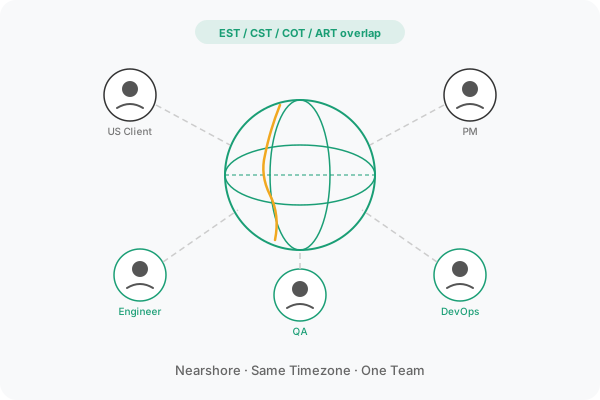
What nearshore staff augmentation means for US teams
Nearshore means engineers sit within roughly three time zones of your headquarters. For Miami, New York, or Chicago buyers, LATAM is the practical nearshore bench: same-day standups, live pairing, and incident response without overnight handoffs. Staff augmentation adds those engineers to your existing team structure rather than outsourcing delivery to a separate vendor pod.
That model fits when you already have an engineering manager, a backlog, and coding standards, but headcount lagged behind roadmap pressure. Compare with our nearshore development outsourcing service when you want a managed relationship, or offshore developer hiring when async-first maintenance work dominates.
Timezone overlap you can plan sprints around
Most US Eastern teams get four to six shared hours with Argentina and Colombia. Central time buyers often see five to seven hours. Pacific teams still get a morning block for standups and reviews if ceremonies land before noon local. We document overlap windows in the master service agreement so both sides know when synchronous work is expected versus when async updates carry the thread.
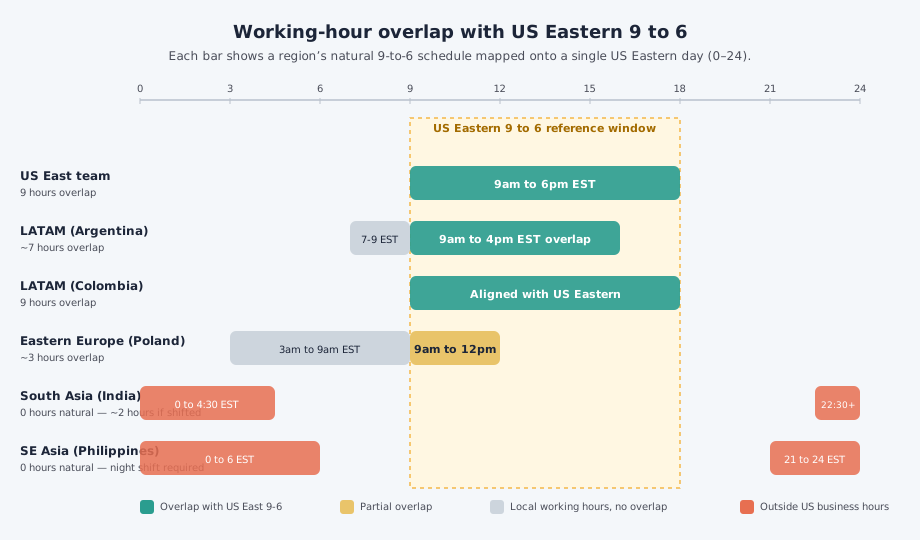
Research on distributed teams from Atlassian's Team Playbook consistently shows overlap hours predict rework better than headline hourly rates.
Cost, quality, and the tradeoffs buyers actually feel
Rates. Senior nearshore developers land in the USD 4k to 9k monthly staff augmentation band. US onshore seniors often run USD 14k to 22k fully loaded. The gap funds two extra engineers on the same budget, not a downgrade in seniority, when vetting stays strict.
Quality signals. We reject roughly seven in ten applicants before you see a resume. Live pairing and reference checks matter more than algorithm puzzles for product teams.
Hidden costs. Rework from timezone friction, attrition mid-sprint, and body-shop rotation erase rate savings fast. We track engagement tenure (average above 14 months) and keep the engineer who interviewed as the engineer who ships.
When nearshore is wrong. If you need US clearance, same-city onsite presence, or deep institutional knowledge that takes years to build, hire in-house. We say that plainly in discovery.
Talent profile: who shows up on your standup
Our nearshore bench skews senior: five or more years shipping production code, fluent English, and experience with US-style agile ceremonies. Common stacks include React, Node.js, Python, Java, .NET, Go, and mobile (React Native, Flutter, Swift, Kotlin). For Spring Boot outsourcing models and a short video overview, see Java development outsourcing. When iOS and Android need one release train and store compliance owner, see our dedicated mobile development team page. When Android alone is the product surface, see the dedicated Android development team page. For individual role pages see hire software developers, hire agile developers, hire React developers, hire Node.js developers, and hire FinOps engineers when cloud spend governance is the gap.
About 40% of our clients are venture-backed startups; the rest are mid-market and enterprise programs in healthcare, fintech, logistics, and payments. Real references include the Viking Services payment operations dashboard and BinSensors smart-city IoT platform.
Communication, tooling, and how engagements run
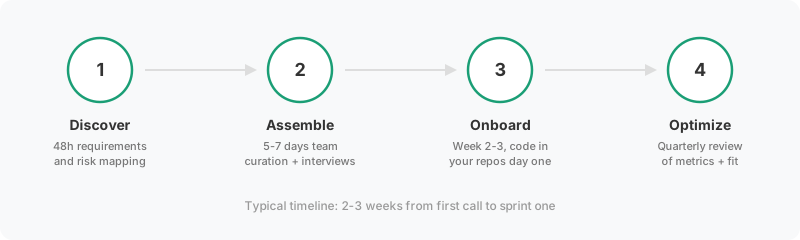
Engineers join your GitHub or GitLab, Jira or Linear, Slack or Teams, and on-call rotation when you want them there. We run a 30-minute brief, present one to three candidates within a week, and parallelize security onboarding with environment access. Discovery takes three to five days; team assembly five to ten days; first meaningful deliverables often land in week three or four per our standard cadence.
Risks and how we close them
- Misaligned seniority. Mitigated by pair-programming screens and written PR exercises, not title trust.
- Security gaps. NDAs, least-privilege access, and OWASP-aligned baselines before production credentials.
- Attrition. Bench coverage, structured handoffs, and a two-week satisfaction guarantee on new placements.
- Cultural mismatch. Candidates work with US clients before we propose them; you interview only after our gates.
Nearshore versus offshore, in-house, and dedicated teams
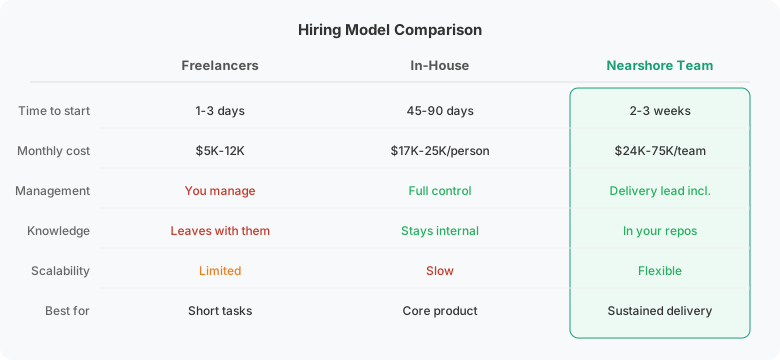
Nearshore staff aug (this page): Individuals embedded in your team, USD 4k to 9k per month, best for backlog acceleration with your EM in charge.
Offshore: Lower rates, larger timezone offset. See hire offshore developers for regional brackets and when async fits.
In-house: Best for long-term culture carriers and regulated roles requiring direct employment.
Dedicated nearshore team: Pod with delivery lead, USD 12k to 60k per month. See hire nearshore development team.
Mini case study: Pinewood Compliance
Composite illustrative scenario; names and metrics represent a pattern we see across regulated SaaS engagements.
Pinewood Compliance sells SOC 2-oriented workflow software to US regional banks. Their VP Engineering had three open senior full-stack seats for nine weeks while PCI-related API work stalled. We placed two nearshore engineers from Uruguay and one from Colombia within eleven business days at roughly USD 7.2k per month each.
Within eight sprints, pull-request rework rate dropped from 19% to 6%, nightly regression runtime fell from 52 minutes to 18 minutes after the QA automation engineer we added in month two stabilized Cypress gates, and the team shipped the auditor-requested evidence export on the original regulatory date. Pinewood kept all three engineers past the first quarter and expanded with a fourth seat for database performance work.
OUR STANDARDS
- Embedded, not detached: engineers join your ceremonies and tools.
- Code you can own: no lock-in; documentation and tests stay in your repos.
- Secure by design: least-privilege access and secret hygiene from day one.
Frequently Asked Questions
Most engagements start within 10 business days. After a 30-minute brief we present one to three pre-vetted LATAM candidates within a week. Security onboarding runs in parallel so engineers can open a first pull request by day three.
Argentina, Colombia, Mexico, and Uruguay typically share four to six working hours with US Eastern and Central time. Pacific buyers still get a solid morning overlap for standups, pairing, and incident response.
Staff augmentation runs USD 4k to 9k per month per senior developer versus USD 14k to 22k for comparable US hires. The savings fund roadmap capacity, not lower quality, when vetting and overlap are handled deliberately.
Staff augmentation adds individual engineers under your management. A dedicated nearshore development team is a self-contained pod with its own delivery lead. Many clients start with one or two augmented engineers before scaling to a pod.
Every candidate passes a five-stage screen: technical filter, live coding, pair programming with our engineering lead, reference checks, then your interview. About three in ten applicants pass all gates.
Yes. We sign NDAs and data processing addenda before repo access, route credentials through your secret manager, and staff engineers who have shipped in regulated fintech and healthcare codebases.
Contact us
Tell us about your team, stack, and timeline.