Hire agile developers for staff augmentation
· Typical time to first merged story: 10-12 business days
Hire agile developers through Siblings Software when your squad needs embedded engineers, Scrum Masters, or QA who already deliver inside Scrum or Kanban ceremonies. This page covers the role, buyer scenarios, the Sprint Embedding Test, engagement models, monthly USD bands, risks, and when staff augmentation fits better than freelancers or a long in-house search.
Agile developer is not a standardized job title. Buyers usually mean hands-on engineers who ship inside two-week sprints or continuous flow boards, join standups and refinement, and keep WIP visible on your board. We staff nearshore from Argentina with full-time engineers who overlap US Eastern business hours. Engineers we place have split epics into demonstrable slices, closed retro action items with owners, and read the Scrum Guide and your actual board states, not certification slide decks. For broader engineering capacity see software developer staff augmentation; for timezone context read nearshore developer hiring; for sprint QA depth see QA automation staff augmentation.
When evaluating vendors, ask for a live sprint-shaped exercise, published monthly bands, and a clear answer on when a developer plus coach pair beats one senior. When ceremonies are healthy but delivery still slips, compare agile development outsourcing. If you need Siblings to own a workstream with QA and delivery leadership, see dedicated agile development teams.
Most clients get 4-6 hours of direct overlap with US Eastern and Central time for standups, refinement, and sprint reviews.
Prefer numbers before a call? Jump to monthly pricing bands for embedded seniors, developer plus coach pairs, and small pods.
What agile developers do in client teams
Sprint delivery inside your ceremonies, not a reprint of the agile outsourcing homepage.
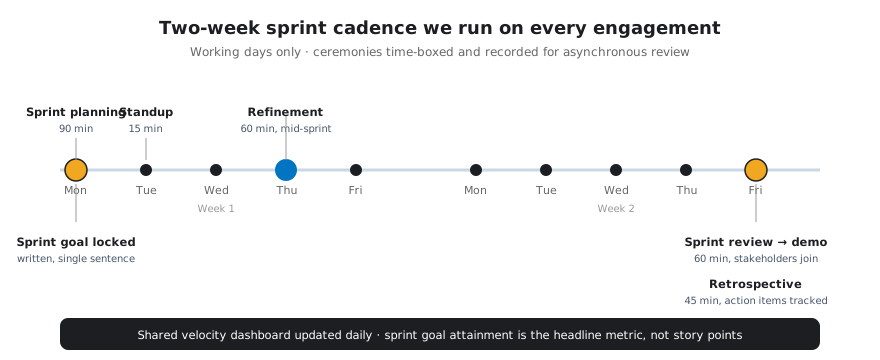
In a typical month with us, an embedded agile developer might own stories through your two-week cadence, rewrite a vague epic into three demonstrable slices during refinement, pair on a rollout stuck at your Definition of Done, facilitate a retro action item they actually close next sprint, and demo working increments to stakeholders who only attend review. The diagram below is a schematic of those parallel tracks; your mix depends on squad maturity, product complexity, and whether you also need a Scrum Master seat.
Sprint execution and board hygiene
Own stories end to end inside your one-week or two-week cadence. Update Jira, Linear, or Azure DevOps daily, flag blockers in standup, and keep the sprint goal legible to stakeholders who only attend review.
Backlog collaboration and refinement
Participate in refinement with product and QA. Write acceptance criteria, estimate with the team, and push back when scope will not fit the sprint without hiding risk until demo day.
Continuous improvement and retro follow-through
Bring retro action items into the next sprint with named owners. Document decisions in your wiki, automate repetitive release steps, and pair on unfamiliar parts of the codebase.
Scrum Master and coach profiles
When the gap is facilitation rather than code, we place fractional Scrum Masters or coaches who focus on ceremony quality, WIP limits, and stakeholder communication while your engineers keep architecture ownership.
Tools we meet most often: Jira, Azure DevOps, Linear, GitHub or GitLab pull requests, and your existing Slack or Teams channels. We align with DORA metrics and Kanban practice where teams track cycle time alongside story counts, not velocity theater alone.
When companies hire agile developers through us
Five buyer shapes cover most discovery calls; your situation may combine two.
Sprint predictability slipped
Carry-over stories keep growing, sprint goals blur, and retros produce lists nobody closes. Staff aug adds engineers or a fractional coach who improve refinement and delivery discipline inside your existing cadence.
Headcount freeze with a deadline
Compliance, seasonal, or roadmap pressure with no new FTE approvals. Embedded seniors ship inside the current sprint while internal recruiting runs in parallel.
Scaling from one squad to three
New teams copied ceremonies but not habits. You need seniors who model backlog judgment, demo discipline, and pairing so squads do not drift into parallel backlogs.
Attrition before knowledge transfer finished
A critical product line lost senior context mid-quarter. Augmentation bridges delivery while you hire permanent replacements and document what the departing engineer owned.
Weak refinement eating planning days
The first two sprint days disappear into story clarification. A senior who participates in mid-sprint refinement and writes acceptance criteria with product reduces planning drag.
No engineering lead or product owner to prioritize the backlog? Say so on the call. We turn down engagements when staff augmentation is the wrong shape and point you to a dedicated agile squad instead.
Sprint Embedding Test
A lightweight vetting framework buyers can reuse even if they never hire us.
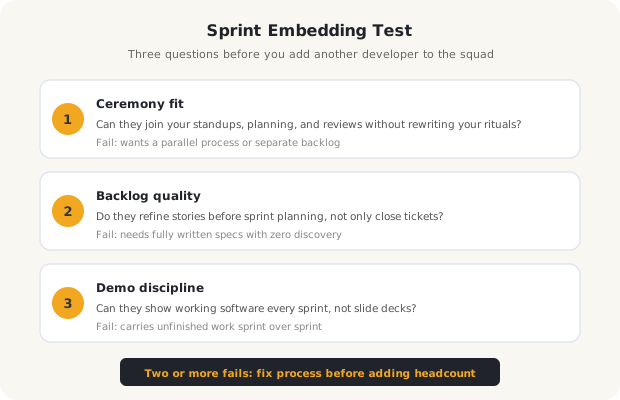
Most mismatches on agile engagements come from hiring a strong coder who has never owned a sprint goal, or a certified Scrum Master who cannot slice an epic into demonstrable increments. Before we shortlist, we score three signals with your engineering lead on a thirty-minute call.
- Signal A: ceremony fit. Can a new engineer join your standups, planning, and reviews without creating a parallel process or separate backlog?
- Signal B: backlog quality. Do stories arrive refined enough that a senior can start coding in the first two days of a sprint? If not, do you have product bandwidth to fix that with coaching help?
- Signal C: demo discipline. Does the team show working software every iteration, or do reviews become status meetings with slide decks?
If two or more answers are negative, fix process or leadership gaps before adding headcount. We use the same test in vetting. Candidates who only describe certification courses rarely survive the live exercise where we ask them to slice an ambiguous epic into demonstrable increments.
Engagement models and monthly USD bands
Published bands beat "contact us for a quote" when you are budgeting a quarter.
We publish ranges because hidden pricing wastes cycles. The point inside the band moves with seniority, coaching scope, stack depth, and compliance requirements such as SOC 2 or HIPAA onboarding.
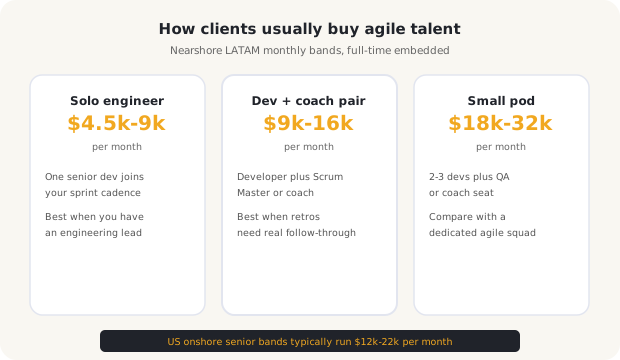
Embedded senior developer
One senior in your ceremonies, refinement, and repositories. Strong when you have a Scrum Master or engineering lead who owns ceremony quality and you need throughput inside the current sprint.
Monthly: USD 4,500 to 9,000. Minimum: three months.
Developer plus coach
A delivery engineer pairs with a fractional Scrum Master or coach when retros generate lists nobody closes and planning still runs long. Common when facilitation discipline matters as much as code output.
Monthly: USD 9,000 to 16,000. Minimum: three months.
Small delivery pod (three to four seats)
Two or three developers plus QA or coaching for parallel workstreams without a full outsourced squad. If you want Siblings to own delivery end to end, a dedicated agile development team is usually the better commercial shape.
Monthly: USD 18,000 to 32,000. Minimum: four months.
Figures include recruiting, benefits, laptops, and employer costs for nearshore LATAM delivery. US onshore seniors typically run USD 12,000 to 22,000 per month when on-site or niche compliance requires it. Your Jira, CI, and conferencing licenses stay on your accounts.
Hiring process timeline
Short, inspectable steps that end with you meeting the person who will commit to your sprint board.
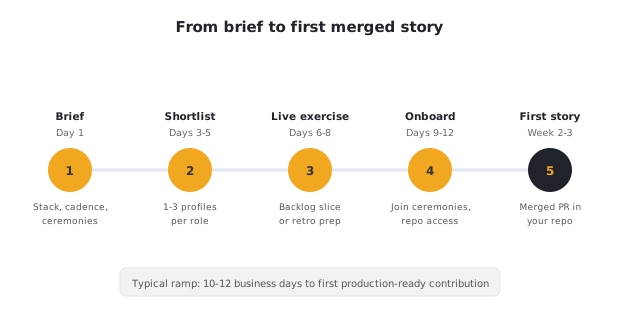
- Discovery (day 1). Stack, sprint cadence, tooling, and the gap you need filled. We say no on the call when we are the wrong partner.
- Shortlist (by day 5). One to three pre-vetted profiles. You receive recent sprint context, pull request samples where available, and a written answer to a scoped backlog question.
- Live exercise (days 5 to 8). Ninety minutes with your engineering lead on a sprint-shaped problem: slice an ambiguous epic, facilitate a fifteen-minute refinement slice, or walk through a retro action item they closed.
- Paperwork (days 8 to 10). Master services agreement, monthly statement of work, fifteen-day notice clause in plain language.
- First merged story (days 10 to 12). Onboarding pairs on a real story inside the current or next sprint so you see integration speed, not slide decks.
Regulated clients with extended security onboarding may add a few days.
Agile staff aug versus freelancer, in-house, or dedicated squad
Each option wins sometimes; pretending otherwise wastes your time.
Freelance marketplaces
Win on isolated tasks under four weeks. Lose on ceremony fit, institutional knowledge, and sprint continuity when the incentive is ticket throughput across unrelated clients.
In-house hiring in the US or UK
Wins on five-year ownership of team culture and architecture standards. Loses on funnel length during freezes or bridge periods when sprint commitments do not wait.
Dedicated agile squad
Win when Siblings should own delivery leadership, QA seats, and a workstream roadmap. Lose on monthly cost when you only need one or two engineers inside a healthy squad.
Where we sit
Small senior bench, GMT-3, full overlap with US Eastern hours, fifteen-day notice after the minimum, and the person you interview is the person who commits. Roughly three in ten applicants pass all five vetting gates.
Composite scenarios (anonymised, rounded numbers)
Shapes we have shipped multiple times; details blended to protect clients.
Compliance SaaS with carry-over stories
US mid-market policy workflow product on React and Node, two-week Scrum, same regulatory stories carried four sprints. Two senior developers plus fractional Scrum Master embedded in twelve business days. Definition of Ready checklist, mid-sprint refinement, and working demos every two weeks to compliance stakeholders in the composite retelling.
Scaling squads after a reorg
Series B product org grew from one squad to three in six months. Ceremonies copied but refinement habits did not. Three embedded seniors over two quarters modeled backlog splitting, retro follow-through, and demo discipline so new teams did not drift into parallel boards.
Mini case study
Willowgate Compliance: sprint goals recovered, refinement moved mid-sprint
Two developers plus fractional Scrum Master, eight sprints, composite illustrative scenario.
Context. US mid-market employer policy workflow SaaS (composite). React and Node squad ran two-week Scrum but carried the same regulatory reporting stories across four consecutive sprints. Product blamed engineering capacity. Engineering blamed unclear requirements. Retros produced action items with no owners.
What we did. Siblings placed two senior full-stack developers and a fractional Scrum Master through staff augmentation in twelve business days. We introduced a Definition of Ready checklist, split the reporting epic into demonstrable slices, and moved refinement to mid-sprint instead of the hour before planning.
Outcome. Sprint goal completion improved from roughly half to most sprints. Carry-over stories per sprint dropped materially. The team demoed working increments to compliance stakeholders every two weeks rather than slide-only reviews.
Caveat. Weeks one and two focused on refinement and board hygiene before velocity looked better on dashboards. That trade is explicit: we optimize for predictable sprint delivery, not hero commits in week one.
At a glance
Stack: React, Node, Jira, two-week Scrum
Team: 2 seniors + fractional SM
First merged story: 12 days
Read the Viking Services case study (dedicated nearshore squad with sprint delivery on an Angular product).
Risks of external agile staff and how we mitigate them
Honest controls beat risk-free slogans.
Process theater without delivery
Mitigation: week one includes pairing on a real story so delivery is visible, not a separate Jira board nobody watches.
Knowledge silos at roll-off
Mitigation: documentation and walkthroughs before roll-off. Optional shadowing helps internal hires absorb context.
Communication gaps across time zones
Mitigation: LATAM overlap with Eastern through Pacific is real time in Slack. EU-hours coverage is staffed explicitly when you ask in the brief.
Zero product owner bandwidth
Mitigation: developers join refinement with product owners. If PO bandwidth is zero, we say so in discovery and recommend a coach seat.
Why Siblings for agile developer staff augmentation
Small bench, direct access, no parallel sales organization inventing capacity.
30+
Engineers in-house
Cordoba-based team; fintech, health, compliance, and SaaS clients
Dozens
Sprint-shaped placements
Scrum, Kanban, Scrumban, Jira, Linear, regulated releases
GMT-3
Argentina overlap
Same-day with US East; workable with most US zones
We are deliberately not a fifty-person recruiting shop. Founders still review new agile engagements, and engineers talk to clients without a telephone game of account managers. That is why the process above stays short.
Reviewed by Javier Uanini, Founder & CEO, Siblings Software: technical discovery on agile developer engagements, pricing bands, and fit decisions. Last reviewed September 2026.
Frequently Asked Questions
Senior engineers, Scrum Masters, or agile coaches employed full-time by Siblings and embedded in your squad. They join your ceremonies, work in your Jira or Linear board, open pull requests in your repositories, and follow your Definition of Done. We cover recruiting, payroll, and local employer obligations. You keep product priorities, architecture decisions, and intellectual property.
A single senior agile developer is usually USD 4,500 to 9,000 per month all-in for nearshore LATAM talent. A developer plus Scrum Master or coach pair lands around USD 9,000 to 16,000 per month. A three-to-four seat pod with QA or coaching is typically USD 18,000 to 32,000 per month. Figures assume a full-time month and exclude your own tooling licenses.
Most engagements reach a first merged story in roughly 10 to 12 business days: shortlist by day five, live exercise before day eight, onboarding by day ten, then contribution inside the current or next sprint. Regulated clients with extended security onboarding may add a few days.
We staff for Scrum, Kanban, Scrumban, and dual-track discovery plus delivery. Candidates must show recent production work inside two-week sprints or continuous flow boards, not only certification badges. We match to your tooling: Jira, Azure DevOps, Linear, or Trello.
We end on a live exercise drawn from sprint-shaped problems: breaking down an ambiguous epic, facilitating a fifteen-minute refinement slice, or walking through a retro action item they actually closed. Roughly three in ten applicants pass all five gates including reference checks.
Choose staff augmentation when you have an engineering lead, a product owner, and ceremonies that mostly work but need more delivery capacity or coaching discipline. Choose a dedicated agile development team when you want Siblings to own a workstream end to end with a full pod including QA and delivery leadership.
Raise it early. We replace the engineer at no additional placement fee on standard agreements and run overlap so your sprint does not stall. Either side may exit with fifteen days notice after the minimum term.
Our standards for agile delivery
What we hold ourselves to once embedded.
- Sprint goals are single sentences. If the team cannot state the goal in one line at planning, we push back before work starts.
- Retro actions have owners. Three open items maximum per sprint, each with a name and a verification step in the next retro.
- Demos show software. Review meetings default to working increments. Slide-only updates are a signal to fix scope, not extend the meeting.
- Honest forecast advice. If the backlog cannot fit the sprint, we say so before commit, not after stakeholders expect a release.
- Written artifacts survive turnover. Refinement notes, acceptance criteria, and incident learnings that change the system.
Contact us
Describe your sprint cadence, tooling, and the gap you need filled. We reply within one business day, or tell you we are not the right partner.