Hire SRE engineers for embedded staff augmentation
· Typical time to first production reliability change: 12–15 business days
Hire SRE engineers through Siblings Software when uptime commitments outpaced how your team measures and responds to failure. This page explains what embedded site reliability engineers do in client platform teams, when staff augmentation beats a reliability audit, how we vet candidates on SLO design and incident response, monthly pricing bands, risks, and when a small reliability pod makes more sense than a solo hire.
Buyers searching for hire SRE engineers usually need three answers on one screen: who can define SLIs and error budgets in your observability stack, what embedded reliability talent costs per month in plain numbers, and how you avoid the consultant who ships dashboards but never touches on-call rotation design. We staff SRE engineers from Latin America as full-time employees who overlap US Eastern business hours and join your platform ceremonies from week one.
Platform hiring in 2026 is bottlenecked on reliability engineering depth, not console familiarity. Buyers evaluating partners now ask what the on-call and SLO workflow looks like before they discuss rate cards, because the gap between teams with published error budgets and tuned paging versus teams waking four engineers for CPU thresholds is wide enough to affect enterprise deals. For CI/CD breadth, see embedded DevOps engineers; for golden paths and IDP work, read platform engineer staff augmentation; for cluster day-two work, read Kubernetes developer staff augmentation; for cloud spend governance, explore FinOps engineer staff augmentation; for timezone context, see nearshore developer hiring.
If you need Siblings to own an entire reliability program rather than individuals in your standups, compare DevOps engineering outsourcing or platform engineering services from the same leadership group.
"The expensive SRE hire is not the one who adds dashboards in week one. It is the one who cannot explain which alerts they would retire before the next release window."
Reviewed by Javier Uanini, Founder and CEO, Siblings Software. Last reviewed 10 July 2026.
Prefer numbers before a call? Jump to monthly pricing bands for solo engineers, pairs, and reliability pods.
What SRE engineers do in your platform team
Reliability ownership between the uptime promise and the pager.
A strong SRE engineer on staff augmentation joins your error budget review with product and platform leads, owns SLO definitions for revenue-critical APIs, and documents what happens when paging volume spikes on a Friday. Day to day that means SLO work, on-call hygiene, observability tied to user impact, incident runbooks, and postmortem culture that survives team turnover.
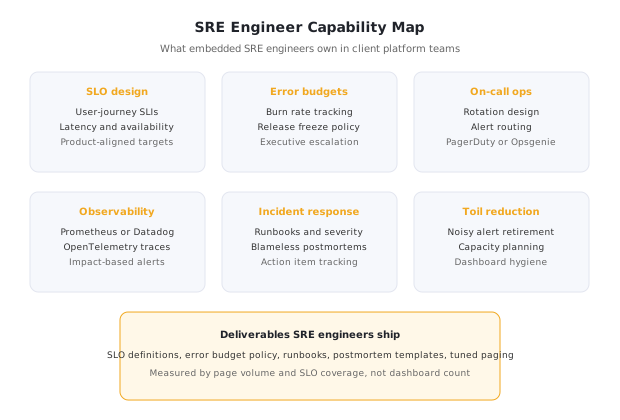
Six work areas embedded SRE engineers typically own inside client platform teams.
This role differs from a generic DevOps engineer because success is measured by SLO coverage, page volume trends, and mean time to acknowledge, not deployment frequency alone. It differs from a Kubernetes developer because the deliverable is error budget policy and blameless postmortems, not Helm chart refactors. It differs from a reliability consultant because the engineer shadows your pager, opens pull requests in your observability repos, and stays through the second incident after onboarding.
When companies hire SRE engineers
Five situations cover most discovery calls. Yours may combine two.
Enterprise deal blocked on published SLOs
A prospect asked for availability targets and your team has Grafana panels but no SLIs tied to user journeys. You need a written reliability map before anyone proposes a big-bang observability rewrite.
On-call fatigue from misrouted alerts
Paging wakes three engineers for the same flaky health check while customer tickets tell a different story. Nobody owns alert tuning or severity definitions.
Multi-region Kubernetes without error budgets
EKS or GKE estates run fine operationally, but product and platform disagree about what happens when latency SLOs burn before a launch window.
Post-incident reviews that never close action items
Postmortems happen, but runbooks stay stale and the same failure mode returns within two quarters. You need someone who treats incident learning as operational work.
Platform lead without SRE bandwidth
Terraform and CI/CD already consume the calendar; twelve services wait for SLO definitions. Staff augmentation adds execution capacity without a reorg.
The Production Reliability Coverage Test
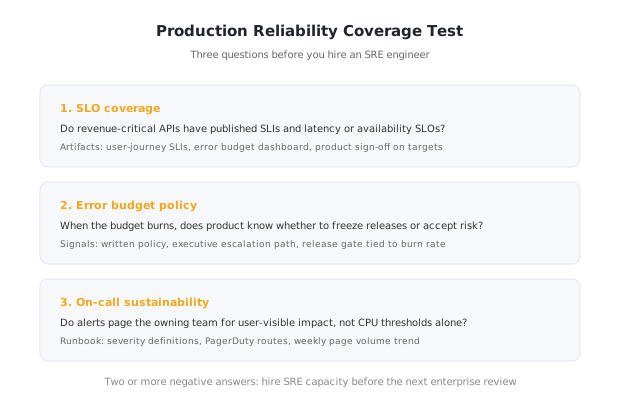
Before we recommend a hire shape, we run three questions we call the Production Reliability Coverage Test. If two or more answers are negative, you need SRE engineering capacity before the next enterprise security or procurement review.
- SLO coverage: Do revenue-critical services have published SLIs and latency or availability SLOs your product team recognizes? We follow Google SRE conventions and your naming standards instead of vanity uptime percentages nobody measures.
- Error budget policy: When the budget burns, does product know whether to freeze releases, roll back, or accept risk with executive sign-off? Budgets without a written policy turn incidents into political debates.
- On-call sustainability: Do alerts page the owning team for user-visible impact? We prioritize candidates who have reduced page volume through alert tuning and runbook discipline, referencing OpenTelemetry signal concepts when clients standardise collectors and backends.
We use the same test in vetting. Candidates who only describe generic "observability maturity" rarely survive the live exercise where we ask them to define SLIs for a latency-sensitive endpoint and name three dashboards they would retire first.
How Siblings vets SRE candidates
Certifications are cheap. We screen for signals that predict whether reliability improvements stick after month three, not only after the first SLO workshop.
- SLO design depth: Can they tie SLIs to user journeys and explain error budget tradeoffs to a product manager without hiding behind infrastructure metrics?
- On-call judgment: Experience redesigning rotations, tuning PagerDuty or Opsgenie routes, and retiring alerts that do not correlate with support tickets.
- Observability stack fluency: Production work on Prometheus, Datadog, or Grafana Cloud with evidence they can match your vendor contract, not only open-source side projects.
- Incident response discipline: Blameless postmortems with tracked action items, runbooks that survived a team change, and rollback rehearsals before high-traffic windows.
- Communication: Platform summaries engineering can act on, severity definitions executives understand, and honest pushback when a dashboard adds noise.
- Red flags: Tool-only backgrounds with no on-call history, inability to explain what they would stop paging on, or recommending a new observability vendor before SLO coverage exists.
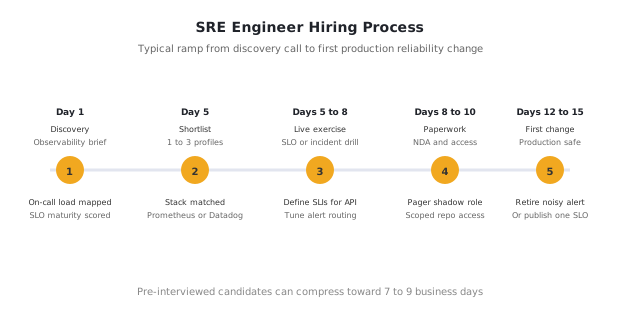
Typical ramp from discovery call to first production-safe reliability improvement.
Engagement models and pricing context
SRE staff augmentation pricing depends on seniority, observability stack depth, on-call expectations, and whether the engineer also owns a parallel observability migration. These bands reflect nearshore LATAM delivery on full-time monthly engagements, aligned with our published infrastructure specialist brackets:
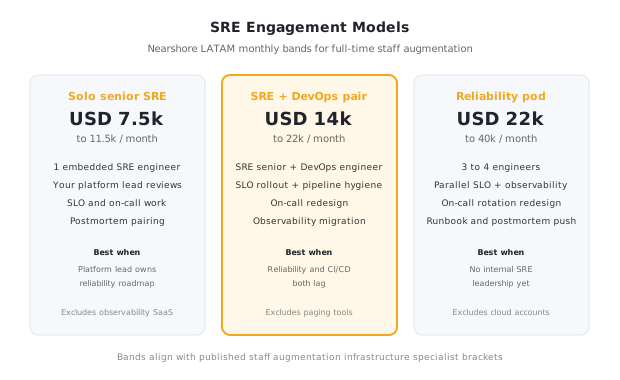
Three common engagement shapes and what each monthly band typically includes.
Single senior SRE engineer
Best when you have a platform lead who can prioritize backlog and paging is mostly sustainable. One engineer in your ceremonies, SLO reviews, and on-call shadow track.
Typical band: USD 7,500–11,500/month.
SRE plus DevOps engineer
The SRE senior sets SLO and on-call guardrails; the DevOps engineer absorbs pipeline and infrastructure work once context lands. Common when reliability rollout and CI hygiene both lag.
Typical band: USD 14,000–22,000/month.
Small reliability pod
When you need SLO rollout, runbook writing, and on-call redesign in parallel while product teams keep shipping. Compare with platform engineering outsourcing when you want Siblings to own delivery end to end.
Typical band: USD 22,000–40,000/month.
Figures align with our published staff augmentation infrastructure brackets. Your observability SaaS, paging tools, and cloud accounts stay on your billing.
Compared to freelancers, in-house hiring, and reliability consultancies
vs. freelance marketplaces
Marketplaces optimize for profile volume. We trade listing speed for engineers who already passed a live SLO or incident exercise and can join your paging shadow rotation with a fifteen-day notice window after the minimum term.
vs. in-house FTE
Full-time SRE hires make sense when reliability work is continuous year round and you have platform leadership to mentor them. Augmentation fits headcount freezes, bridge roles while recruiting closes, or specialty spikes before an enterprise audit. Senior SRE roles often sit open for months in US markets.
vs. reliability consultancies
Project firms deliver an observability assessment and leave. Embedded SRE engineers work in your paging tool, your SLO dashboards, and your incident backlog. If you want Siblings to own outcomes on a fixed scope, that is a different conversation on our DevOps outsourcing pages.
Example engagement: order management API platform
Illustrative scenario based on a composite US B2B order management API engagement. Numbers are representative, not a published client case study.
Harborline Commerce (composite) operates a multi-tenant order and inventory API for mid-market retailers. Their platform team ran eighteen microservices on EKS with Prometheus and Grafana per squad but no published SLOs on checkout or fulfillment paths. On-call woke five engineers per week for pod restart alerts that did not correlate with support escalations. Sales wanted enterprise-tier availability language in contracts; internal DevOps owned CI/CD but nobody owned error budgets or postmortem templates.
Siblings placed one senior SRE engineer and one mid-level DevOps engineer through staff augmentation in fourteen business days. Over six months they defined SLIs and SLOs for five revenue-critical APIs, published error budget policies with product sign-off, retired thirty-seven noisy alerts, rewrote PagerDuty escalation paths, and documented blameless postmortem templates. Weeks one and two were on-call shadowing and alert inventory, not hero dashboard builds. Illustrative outcomes: weekly page volume dropped materially after alert tuning; the checkout API reached a tracked 99.9% latency SLO with a visible error budget; mean time to acknowledge improved because pages routed to service owners; enterprise security review completed without a reliability remediation letter.
For a published reference with observability-heavy platform work, see the NetApp platform engineering case study.
What changed for SRE teams in 2025–2026
OpenTelemetry standardisation pushed more teams toward one collector pipeline with vendor-neutral signals before they renew Datadog or Grafana Cloud contracts. SRE engineers now often document signal ownership before procurement asks for another APM seat.
AI-assisted incident triage appeared in briefs as teams experiment with log summarisation and alert grouping. The operational gap remains the same: without SLOs and severity definitions, AI tools amplify noisy paging instead of reducing it.
Contractual availability language moved downmarket as mid-market SaaS vendors adopt enterprise-style uptime clauses. Platform teams need published SLOs and error budget policies before legal, not after a prospect asks.
Platform engineer versus SRE boundaries sharpened at buyers who already run internal developer portals. This page targets the reliability gap when paved roads exist but measurement discipline and on-call sustainability do not.
Risks and how we reduce them
- Pager access risk: Shadow rotation before primary on-call, documented escalation paths, and explicit severity definitions agreed with your lead before week two.
- Interview star risk: Live exercise on incident timelines, fourteen-day swap window, and a day-fourteen check-in with your platform lead.
- Knowledge continuity risk: SLO definitions, runbooks, and postmortem templates live in your wiki or repository, not a vendor portal.
- Vanity dashboard risk: Monthly scorecard on page volume, SLO coverage, mean time to acknowledge, error budget burn rate, and postmortem action item closure.
- Access risk: Scoped observability and repo permissions, NDAs before incident data sharing, and no shared root credentials in chat.
- Communication risk: LATAM overlap with Eastern through Pacific is real time in Slack. EU-hours coverage is staffed explicitly when you ask in the brief.
OUR STANDARDS
What "done" means when you hire SRE engineers through Siblings.
- SLOs tie to user impact: Availability and latency targets map to journeys customers care about, not only pod health checks.
- Error budgets have a policy: Product and platform agree what happens when the budget burns before the next release window.
- Pages wake the right team: Alert routing, severity definitions, and runbooks are documented before primary on-call.
- Honest scope advice: If alert tuning must come before another observability vendor, we say so before the sprint starts.
Frequently asked questions
Buyer objections we answer on discovery calls when teams evaluate SRE staff augmentation.
Hiring from Argentina? See the Argentina mirror of this page (separate site, same engagement model).
CONTACT US
Tell us about your observability stack, on-call load, and reliability timeline. We will shortlist accordingly.