Hire platform engineers for staff augmentation
· Typical time to first production platform change: 12 to 15 business days
Hire platform engineers through Siblings Software when your team needs embedded specialists for internal developer platforms: Backstage or custom portals, golden paths, self-service environments, and adoption programs inside your repositories. This page covers the role, common hiring scenarios, our Platform Delivery Fit Check vetting framework, engagement models, monthly USD bands, risks, and when staff augmentation fits better than freelancers or a six-month US search.
Platform engineering in 2026 is product work for internal customers. Product squads still open tickets for deploy steps the portal was supposed to handle, catalog entries drift, and paved roads rot when nobody maintains templates. We place full-time engineers from Latin America who overlap US Eastern business hours and commit to your IDP repos under a Miami-coordinated contract. Engineers we shortlist have shipped adoption programs, not demo portals, and reference Backstage upstream patterns and CNCF platform engineering guidance where they apply. For CI/CD and IaC depth see DevOps engineer staff augmentation; for cluster day-two work see Kubernetes developer staff augmentation; when SLOs and on-call need dedicated ownership see SRE engineer staff augmentation; for timezone context read nearshore developer hiring.
When evaluating vendors, ask for a live exercise on your portal shape, published monthly bands, and a clear answer on when a small pod beats one senior. If you need full delivery ownership rather than individuals embedded in your rituals, compare platform engineering outsourcing from the same leadership team. For a real staff-augmentation pattern at scale, see our NetApp platform engineering case study.
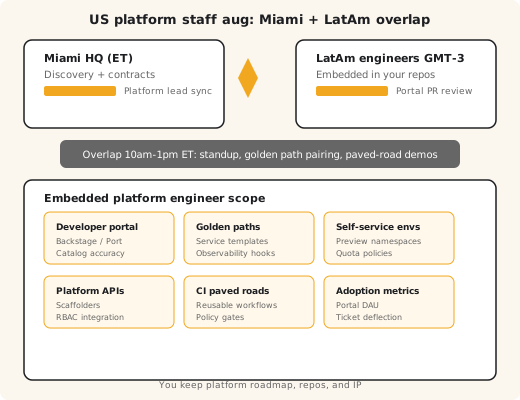
Most US clients get 3 to 4 hours of direct overlap with Eastern time for stand-ups, portal reviews, and golden path pairing.
Prefer numbers before a call? Jump to monthly pricing bands for embedded seniors, pairs, and small pods.
What platform engineers do in client teams
IDP product work, distinct from DevOps pipelines or Kubernetes day-two ops.
"Senior platform engineer" on a job board rarely tells you what changes in your week. With us, an embedded engineer might ship a Go or Node.js golden path with observability hooks, fix Backstage catalog ingestion that made three squads distrust the portal, run office hours so teams stop bypassing self-service, and document a paved road for preview environments. The diagram below maps those parallel tracks; your mix depends on portal maturity, squad count, and how much toil still lives in Jira.
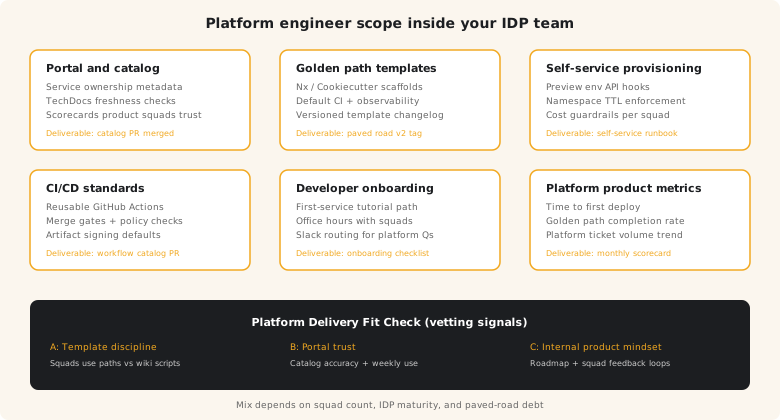
Developer portals and catalog hygiene
Backstage, Port, or bespoke portals with accurate service catalogs, ownership metadata, and docs product teams actually open. We document what is bespoke versus upstream so the portal does not become stale YAML nobody trusts.
Golden paths and paved roads
Opinionated templates for new services, environments, and observability baselines that reduce decision fatigue. Deliverables include scaffold repos, Terraform or Helm starters, and README steps a squad can finish without a platform ticket.
Self-service workflows and platform APIs
Scaffolders, environment provisioning hooks, and internal APIs that product teams call instead of opening tickets. Changes ship with rollback notes and ownership tags your platform lead can audit.
Adoption programs and toil reduction
Office hours, migration playbooks, and metrics that track portal usage and ticket deflection, not vanity plugin counts. We align with the Google SRE idea that toil should shrink over time.
Tools we meet most often: Backstage, internal developer portals, template engines (Cookiecutter, Yeoman, Nx generators), Git-backed config, and your existing incident channels. We are not a substitute for cluster operators or pipeline owners; we make those capabilities discoverable and repeatable for product squads.
When US companies hire platform engineers through us
Four buyer shapes cover most discovery calls; yours may combine two.
VP Engineering with a portal nobody uses
Backstage deployed, catalog half-wrong, squads still clone repos manually. Staff aug bridges accurate metadata, two paved roads that work end to end, and office hours that rebuild confidence without a six-month rewrite project.
Platform leads inheriting fragmented developer experience
Every squad has a different bootstrap script, docs live in five places, and "platform team" means whoever answers Slack first. You need a calm audit: what is load-bearing, what should become a golden path, which self-service flows actually save time.
Product orgs outgrowing one platform generalist
Microservices multiplied; golden paths did not. You need someone who ships templates, teaches squads what "done" means for IDP changes, and keeps the portal current while feature teams ship weekly.
Regulated SaaS with developer evidence gaps
SOC 2 or HIPAA audit windows approaching. You need change logs from template to production, ownership in the catalog, and paved roads auditors can follow, not a maturity slide deck. We embed engineers who have shipped under those constraints.
None of the above? Say so on the call. We turn down engagements when the fit is wrong. Start from the staff augmentation hub if you are still choosing an engagement model.
Platform Delivery Fit Check
A lightweight vetting framework buyers can reuse even if they never hire us.
Most mismatches come from hiring a strong DevOps generalist who has never owned portal adoption, or an application developer who treated Backstage as a side project. Before we shortlist, we score three signals with your platform lead on a thirty-minute call.
- Signal A: template discipline. If squads still bootstrap services manually or templates diverge every quarter, we overweight candidates who have shipped and maintained paved roads with measurable adoption.
- Signal B: portal trust. If the developer portal exists but weekly active use is low or catalog entries are stale, we prioritize engineers who fix metadata pipelines, run office hours, and measure ticket deflection from self-service.
- Signal C: internal product mindset. If internal customers treat the platform team as a ticket queue, we bias toward engineers who write roadmaps, gather feedback from squads, and ship incremental value instead of big-bang rewrites.
Shortlists that align on those three signals before interviews tend to need fewer swaps mid-engagement. That is not a guarantee for your team; it is how we reduce guesswork before anyone signs a statement of work.
Engagement models and monthly USD bands
Published bands beat "contact us for a quote" when you are budgeting a quarter.
We publish ranges because hidden pricing wastes cycles. The point inside the band moves with seniority, stakeholder-facing English requirements, and rare depth such as multi-portal migrations, regulated audit support, or custom Backstage plugin work at scale.
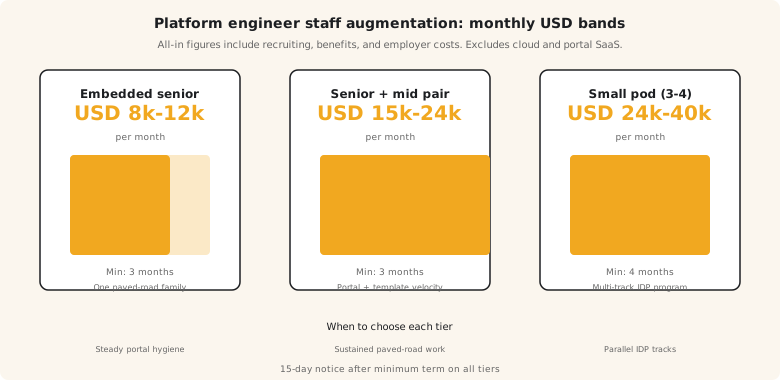
Embedded senior
One senior in your ceremonies, portal reviews, and adoption office hours. Strong when your IDP culture is healthy, you have one primary golden path family, and you need throughput without re-teaching platform fundamentals.
Monthly: USD 8,000 to 12,000. Minimum: three months.
Senior + mid pair
The senior sets golden path guardrails; the mid-level absorbs template and catalog tickets once context lands, usually by week four. Common when you want sustained portal hygiene more than a single niche.
Monthly: USD 15,000 to 24,000. Minimum: three months.
Small pod (three to four engineers)
Covers vacations internally and can split between a portal refresh track and parallel paved road work under your lead. If you want a vendor-owned roadmap instead, dedicated platform team outsourcing is usually the better commercial shape.
Monthly: USD 24,000 to 40,000. Minimum: four months.
Figures include recruiting, benefits, laptops, and employer costs. Cloud, portal hosting, and developer tooling SaaS stay on your accounts.
Hiring process timeline
Short, inspectable steps that end with you meeting the person who will commit to your IDP repos.
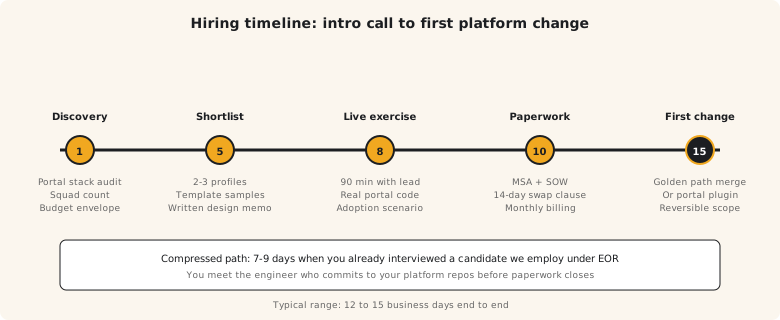
- Discovery (day 1). Portal stack, golden path inventory, squad count, adoption pain points, budget envelope. We say no on the call when we are the wrong partner.
- Shortlist (by day 5). Two or three profiles from our bench plus, when needed, engineers we have tracked who are finishing notice elsewhere. You receive template samples, portal write-ups where available, and a written answer to a scoped IDP adoption question.
- Live exercise (days 5 to 8). Ninety minutes with your platform lead on a sanitised slice of work: broken catalog entity, golden path template drift, or self-service workflow product teams cannot finish. No trivia wall.
- Paperwork (days 8 to 10). Master services agreement, monthly statement of work, fourteen-day swap clause in plain language.
- First platform change in production (days 12 to 15). Onboarding pairs on a small, reversible IDP change so you see integration speed, not slide decks.
Platform staff aug versus freelancer, in-house, or agency bench
Each option wins sometimes; pretending otherwise wastes your time.
Freelance marketplaces
Win on narrow spikes under roughly eighty hours: one Backstage plugin, one template pack. Lose on continuity, catalog hygiene, and adoption office hours when the incentive is ticket throughput across unrelated clients.
In-house hiring in the US
Wins on five-year ownership of your paved roads. Loses on funnel length and regret cost when the hire misses at month six while squads still bypass the portal and your platform lead carries the load alone.
Large offshore agencies
Win when you need ten mid-level operators with a PM layer. Lose when the engineer in the interview is not the engineer in your Backstage repo, or when golden path work becomes change-order territory.
Where we sit
Small senior bench, LatAm delivery with US Eastern overlap, Miami-coordinated contracts, fifteen-day notice after the minimum, and the person you interview is the person who commits. That is the trade we optimize for.
Composite scenarios (illustrative, blended details)
Shapes we have shipped multiple times; details blended to protect clients. Not named customer metrics.
Portal relaunch before a Series C diligence window
US B2B SaaS with a Backstage instance product teams ignored. Embedded senior fixed catalog ingestion, shipped paved roads for two backend stacks, and ran weekly office hours. Platform ticket volume for "how do I deploy" class questions dropped in the composite retelling without quoting a fabricated percentage.
Golden paths before a SOC 2 audit
Healthcare-adjacent SaaS with hand-rolled bootstrap scripts and no ownership metadata. Six-week engagement: template boundaries, catalog accuracy, paved road for observability onboarding, evidence packet for auditors. Feature teams kept shipping while platform work ran in parallel.
Example engagement (fictional)
Crestline Analytics: catalog trust and two paved roads in production
Fictional US B2B analytics composite for illustration; not a named client or audited outcome.
Context. Crestline Analytics (fictional) sells embedded analytics APIs to mid-market SaaS buyers. Thirty-five internal engineers, Backstage deployed but catalog ownership was wrong on most services, and every new microservice started from a fork of an old demo repo. The platform lead also owned CI/CD and could not run adoption office hours.
What we did. Weeks one and two mapped which squads bypassed self-service, which templates were load-bearing, and where paved road docs were stale. We shipped a Python golden path with observability hooks, fixed catalog ownership for fourteen services, and documented a second paved road for async workers. Three focused pull requests across weeks four to eight, each with rollback notes aimed at adoption blockers product teams raised in office hours.
Outcome (example narrative). In this fictional composite, squads stopped opening deploy-howto tickets for the two paved roads, portal weekly active use climbed among backend teams, and the internal platform lead regained time for roadmap work. We do not quote pass rates or percentage improvements here because this scenario is illustrative.
Caveat. Weeks one and two looked slow if you measure hero commits only. That trade is explicit: we optimize for compounding IDP adoption. For a real delivery pattern see our NetApp platform engineering case study (eight Go engineers embedded in a platform org).
At a glance (fictional)
Stack: Backstage, Python templates, GitHub Actions
Engagement: One senior, four months
First prod change: ~14 days
Risks of external platform staff and how we mitigate them
Honest controls beat risk-free slogans.
Interview star, week-three stall on adoption
Mitigation: live exercise on real portal code, fourteen-day swap window, explicit day-fourteen check-in with your platform lead.
Shadow platform changes outside your review flow
Mitigation: our engineer joins your platform reviews both directions; we refuse engagements where IDP changes bypass your Git and approval flow.
Knowledge leaves with the engagement
Mitigation: paved road README updates, catalog ownership docs, handover notes at month three even if you extend.
Vanity plugin work instead of ticket deflection
Mitigation: monthly scorecard on three to five numbers your leadership tracks: portal active use, golden path completions, self-service success rate, platform ticket volume, time to first deploy for new services.
Why Siblings for platform engineer staff augmentation
US brand, LatAm engineering bench, direct access to founders on fit decisions.
30+
Engineers in-house
LatAm delivery; fintech, health, collaboration, logistics clients
Since 2014
US-coordinated delivery
Miami HQ; contracts and discovery in US time zones
NetApp
Platform reference
Eight Go engineers embedded in a platform-engineering org
We are deliberately not a fifty-person recruiting shop. Founders still review new platform engagements, and engineers talk to clients without a telephone game of account managers. That is why the process above stays short.
Reviewed by Javier Uanini, Founder & CEO, Siblings Software: technical discovery on platform engineering engagements, pricing bands, and fit decisions.
Frequently Asked Questions
Senior platform engineers employed full-time by Siblings and embedded in your platform or developer experience team. They join your stand-ups, open pull requests in your IDP and portal repositories, pair with product squads on golden path adoption, and work in your Slack or Teams. We cover recruiting, payroll, hardware, benefits, and employer obligations. You keep product direction, platform strategy, and intellectual property. Typical scope spans Backstage or custom developer portals, golden path templates, paved road documentation, self-service workflows, platform APIs, and adoption programs that reduce toil for application teams.
A single senior platform engineer is usually USD 8,000 to 12,000 per month all-in. A senior plus mid pair lands around USD 15,000 to 24,000 per month. A three-to-four person pod with shared IDP context is typically USD 24,000 to 40,000 per month. Figures assume a full-time month, include recruiting and local taxes, and exclude your own cloud, portal hosting, and paid developer tooling so you keep billing and data custody.
Most engagements reach a first production-safe platform change in roughly 12 to 15 business days: discovery on day one, a two-or-three-person shortlist by day five, a ninety-minute live exercise on real portal or template code before day eight, paperwork by day ten, then onboarding with your platform lead. If you already interviewed a candidate we employ under an employer-of-record path, we can compress the middle steps toward seven to nine days.
We end on a live exercise drawn from production-shaped IDP problems: a Backstage plugin that breaks catalog discovery, a golden path template that fails only in one environment, or a self-service workflow that product teams cannot complete without filing a ticket. We publish a short written answer to a scoped platform adoption question before the call so you see reasoning, not buzzwords. We use the Platform Delivery Fit Check to align shortlists with your maturity on golden paths, portal adoption, and platform product mindset.
A solo senior fits a mature portal, one primary golden path family, and a platform lead who can review every change. A pod wins when you are running parallel tracks: Backstage catalog hardening while two new paved roads ship, portal UX refresh, and an adoption program for squads that still bypass self-service. Pods also cover vacation gaps without pausing roadmap work. If you only need CI/CD pipelines or Terraform modules without IDP ownership, compare our DevOps engineer staff augmentation lane instead.
Freelancers fit narrow scopes under roughly eighty hours: one Backstage plugin, one template pack. For ongoing IDP work they optimize for utilization, which often starves portal documentation, golden path maintenance, and office hours with product teams. Our engineers are full-time employees in one time zone with a fifteen-day notice period after the minimum term, a fourteen-day swap window, and an explicit expectation to do unglamorous catalog hygiene alongside roadmap work.
We replace the engineer at no placement fee during the first fourteen days and cover reasonable handover overlap. After that, either side may exit with fifteen days notice. We track fit with a simple day-fourteen question to your platform lead so quiet failure modes do not drift for a quarter.
Our standards for platform engineering work
What we hold ourselves to once embedded.
- Golden paths are maintained, not demoed once. Templates updated when dependencies shift, docs tested by a squad that did not write them.
- Catalog entries stay accurate. Ownership, lifecycle, and links reviewed on a cadence your platform lead agrees to.
- Self-service reduces toil. If a workflow still needs a ticket every time, we fix or retire it.
- Adoption is measured. Portal use, path completions, and ticket deflection tracked without vanity plugin counts.
- Internal customers get a product mindset. Roadmap tradeoffs explained, feedback loops run, big-bang rewrites avoided.
- Written artifacts survive turnover. Paved road READMEs, runbooks for platform changes, handover notes that change the system.
Contact us
Describe your portal stack, golden path inventory, and adoption pain points. We reply within one business day, or tell you we are not the right partner.