Hire Senior iOS Developers for Your Apple Platform Roadmap
Every App Store release is a small act of faith. You are asking Apple to approve your build, asking users to update, and asking your engineering team to stake reputation on a binary that has to behave consistently across six OS versions, three form factors, and a matrix of accessibility settings. You need iOS engineers who understand that weight.
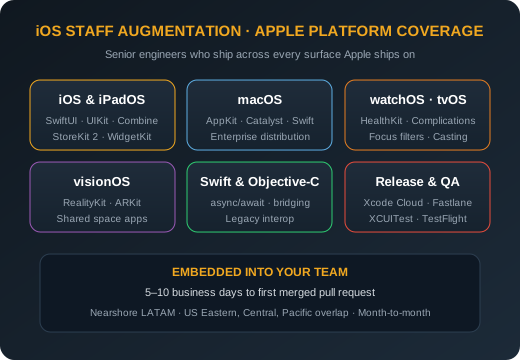
Siblings Software places senior iOS developers into product teams that need more velocity without a year-long hiring cycle. We have been staffing Apple platform engineers since 2014, Swift, SwiftUI, UIKit, Objective-C, and now visionOS and Swift on the server. Our engineers work from Latin America with full US business-hour overlap, commit directly to your repositories, and ship production code in the first sprint.
If you already know you need an entire squad with its own delivery lead, our dedicated iOS development team model might fit better. If you need Objective-C depth for a legacy codebase, see Objective-C staff augmentation. This page is for companies that want individual senior iOS engineers embedded in an existing product team.
Who Hires iOS Developers This Way
Staff augmentation is not the right answer for every iOS problem. The shape of the team on the other side matters. Here are the profiles we see most often on discovery calls, all of them from engagements we have run in the last 24 months:
Scale-ups that added backend faster than they added mobile
You raised a Series B, tripled your backend team, and the iOS app is now the bottleneck. One staff-plus engineer carries it, a contractor ships patches, and the roadmap keeps compressing. You need two or three senior iOS developers who ship without needing architectural handholding, reporting to the manager you already have.
Enterprises with a regulated iOS surface
Healthcare, banking, logistics, and public sector teams usually have enough structure internally. What they lack is extra headcount for a specific initiative: a new SwiftUI module, a HIPAA audit remediation, an App Store Connect compliance sprint. You need engineers who can sign a BAA, clear a background check, and produce artifacts your auditor will recognize.
Product companies planning a visionOS or watchOS expansion
Your core app works. The ambition is a companion experience, a Vision Pro counterpart, a watch complication, a Live Activity. These surfaces are underpopulated in the talent market and often treated as side projects. Augmentation with specialists who have shipped on these platforms keeps your core roadmap moving while the new surface gets dedicated attention.
CTOs bridging a gap in headcount
Someone on the iOS team is going on parental leave, quitting, or shifting to management. You know the backfill will take four months. You do not want to pause a committed release schedule. A month-to-month augmented engineer covers the gap, hands back clean code on exit, and avoids the hidden cost of a stalled sprint cycle.
iOS Skills We Source Against
An iOS engineer label covers a wide surface today. A developer who is strong on SwiftUI might not have shipped a StoreKit 2 migration. Someone who owns Objective-C and UIKit may not have touched async/await yet. When you brief us, we map what you actually need versus what your job description says. Below is the skill set we recruit and screen for.
Swift language & concurrency
Structured concurrency, actors, Sendable, async sequences, and migrating callback-heavy code without deadlocking on the main actor. Familiarity with the Swift.org documentation and the language evolution process.
SwiftUI & UIKit
Declarative view hierarchies, observation with @Observable, mixing SwiftUI into UIKit navigation stacks, and rescuing over-ambitious SwiftUI adoption that never paid off on older devices.
Objective-C interop
Bridging headers, toll-free bridging, method swizzling traps, and incremental migration from mature Objective-C modules. Engineers who do not panic when a crash log lands in objc_msgSend.
Data & networking
Core Data, SwiftData, CloudKit, Realm, GRDB, URLSession with background transfers, WebSockets, and building offline-first sync that survives airplane mode and metered connections.
Payments, identity & StoreKit
In-app purchases with StoreKit 2, Apple Pay, subscriptions with server-side receipt validation, passkeys and Sign in with Apple, and working within App Store review policy without scope creep.
Release engineering
Xcode Cloud, Fastlane, Bitrise, code signing automation, provisioning profile hygiene, TestFlight beta channels, staged rollouts, and Sentry or Crashlytics instrumentation that actually helps triage.
Accessibility & localization
VoiceOver audits, Dynamic Type correctness, right-to-left layouts, string catalogs, and shipping apps that pass a real accessibility review, not a checkbox one. Aligned with the Apple accessibility guidelines.
visionOS, watchOS, tvOS
Companion experiences that reuse your shared frameworks, RealityKit for immersive scenes, Live Activities, complications, Focus filters, and tvOS media apps with analytics and casting.
Quality automation
XCTest, XCUITest, snapshot testing, performance tests in Instruments, device farms, and pull-request gating that fails fast when coverage or flake rates regress.
If you care about the Swift language or server-side Vapor work specifically, our Swift staff augmentation service is the better entry point. For broader cross-platform mobile support, see our app developer augmentation service.
How the Hiring Process Works
We keep the process deliberately short. Most iOS engagements go from first discovery call to a pull request in under two weeks. Here is what each step actually looks like.
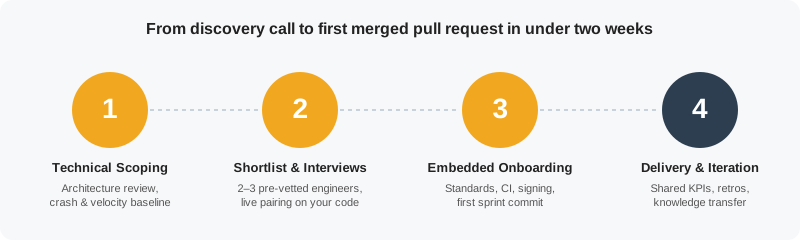
1. Technical scoping (days 1–2)
A 90-minute call with one of our iOS practice leads. We look at your architecture, your backlog, your crash-free session rate, and the specific seniority gap you are filling. You leave with a written scope and a candidate brief, at no cost.
2. Shortlist & interviews (days 3–7)
Two or three vetted iOS engineers with recorded tech interviews, public or sanitized code samples, and compatibility notes (time zone, English level, product domain exposure). You interview them directly. A live pairing session on a real snippet from your codebase is part of the default flow.
3. Embedded onboarding (days 8–14)
Access to your repos, Xcode Cloud or CI of choice, signing certificates, App Store Connect roles, and Slack or Teams. A joint onboarding plan covers branching, PR etiquette, and the first sprint ticket. Your first merged PR typically lands in week two.
4. Delivery & iteration (ongoing)
Weekly reports covering velocity, crash-free sessions, and PR cycle time. Monthly business reviews with your engineering manager. Office hours with our iOS practice lead when Apple ships a new SDK. Clean exit plans if and when you scale down.
What iOS Staff Augmentation Costs
Rates depend on seniority, specialization, and engagement length. These ranges reflect actual 2026 engagements, not aspirational headline numbers:
- Mid-level iOS developer: $9,000–$10,500/month. Three to five years of production iOS experience, comfortable with Swift, SwiftUI, and UIKit. Ships features with light architectural guidance from your tech lead.
- Senior iOS developer: $11,000–$13,000/month. Six to ten years, fluent across Swift and Objective-C, can own a module and mentor others. The most common profile we place.
- iOS tech lead or specialist: $14,000–$16,000/month. Architects who set conventions, run code reviews across the squad, and resolve the hardest bugs. Specialists include visionOS engineers, accessibility leads, and payments/StoreKit domain experts.
- Delivery lead: Included at no extra cost. Runs standups, publishes weekly reports, escalates blockers, and owns exit planning.
For context: a senior iOS engineer in a US metro like Seattle, New York, or Austin typically costs $180,000–$230,000 in base salary, plus equity, healthcare, payroll taxes, and recruiter fees. Fully loaded, that is $18,000–$26,000 per month once you factor in benefits and the hidden cost of a 60 to 120 day time-to-hire. Nearshore augmentation is meaningfully cheaper, but the real saving is time-to-productive.
Engagements are month-to-month after a three-month initial commitment. No annual lock-ins. We ask for the first three months up front because onboarding into a mature iOS codebase (signing, provisioning, build systems, domain context) costs the first week; clients who bail out at day 30 never actually capture the value.
How iOS Hiring Models Compare
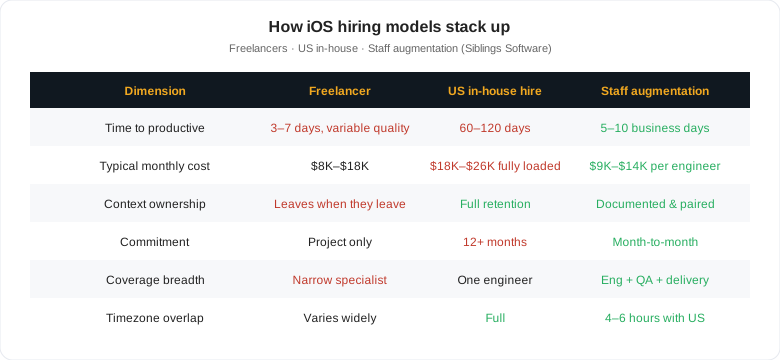
Freelancers can handle isolated iOS work, a specific SwiftUI screen, an iOS 17 compatibility fix, a one-off App Store submission. What they do not do well is sustained work on a codebase that needs context. When a freelancer rotates out, their mental model of your architecture leaves with them.
Hiring in-house remains the right answer when iOS is the core of your product and you need long-term ownership. The trade-off is the hiring timeline: the US iOS market is tight, and senior candidates routinely take four months to close. If your roadmap cannot wait, in-house is not an option yet.
Staff augmentation sits between the two. You get senior iOS engineers with sustained context, at predictable monthly cost, without the recruiting burden. You trade ultimate ownership for speed and flexibility. That trade is worth it while you grow the in-house bench, or permanently when the work is cyclical.
Realistic Scenarios Where Augmentation Wins
These are drawn from actual engagements we have run since 2014. If one of them reads like your situation, we have likely been in the room before.
Shipping a SwiftUI rewrite without freezing the roadmap
Your product wants a SwiftUI overhaul. Your internal engineers are committed to existing UIKit features and a regulatory project. We add two senior iOS developers to carry the SwiftUI migration module by module, use feature flags to ship behind a kill switch, and hand back clean, documented code your team can own afterwards.
Getting ahead of an iOS major release
WWDC beta season starts in June, and by August your crash reports are full of regressions on the new OS. An augmented iOS engineer on beta duty triages the breakage, files radars, pushes fixes to your TestFlight beta channel, and prepares the release candidate long before App Review windows tighten in late September.
Subscription and StoreKit 2 migration
You are moving from auto-renewing subscriptions on the original StoreKit to StoreKit 2 with server-side verification. That is a cross-functional project that touches backend, billing, compliance, and the iOS UI. We embed one senior Swift engineer who owns the iOS edge, coordinates with your backend team, and pairs with finance on receipt validation rules.
Accessibility remediation under audit
A pending ADA or European Accessibility Act deadline, or a contract clause, requires documented accessibility compliance. We add an iOS engineer with VoiceOver and Dynamic Type depth who runs a structured audit, writes remediation tickets, closes them with tests, and delivers a VPAT-ready report you can hand to procurement.
visionOS companion app
Your iPhone app has traction and a visionOS companion would unlock marketing and investor stories. Instead of pulling your core team, we place a visionOS specialist who builds the new surface in a shared framework, reuses your domain code, and keeps the iPhone release calendar untouched.
Bridging an internal iOS team transition
Your iOS tech lead is moving to a platform role and the replacement starts in 90 days. An augmented senior iOS developer holds the line on sprint commitments, mentors your juniors, and does a structured handover when the new lead joins. The team keeps shipping; the transition is absorbed without drama.
Need project-based help instead of embedded engineers? Look at our iOS app development outsourcing service, which runs as a defined-scope engagement with a fixed deliverable.
Case Study: NovaField , Unblocking an iOS Release Under Audit
NovaField is a US-based field service platform used by HVAC and industrial maintenance crews. Their iOS app is a mix of UIKit code written in 2018 and a SwiftUI layer added in 2022. When an enterprise customer asked for a SOC 2 Type II report before renewing a seven-figure contract, NovaField realized three things at the same time: their crash rate was trending up, their iOS accessibility story was thin, and their one senior iOS engineer was about to start a 12-week parental leave.
We ran discovery on a Monday, presented three profiles on Thursday, and had two senior iOS engineers and one QA automation specialist merging code by day twelve. The delivery lead had run two previous fintech engagements and knew what SOC 2 audit evidence looks like. Over the next nine weeks, the augmented squad:
- Rebuilt the sync engine on
URLSessionbackground tasks and retryable operation queues. Background upload failure rate fell from 14% to 3%. - Closed 41 accessibility findings with XCUITest coverage that now fails any PR that regresses VoiceOver traversal on the work-order flow.
- Introduced StoreKit 2 subscriptions for a new tier the commercial team wanted before renewal season, with server-side receipt validation paired with the NovaField backend team.
- Documented architecture decision records, a signing and provisioning runbook, and a beta-channel release playbook that the returning tech lead found waiting on his first day back.
NovaField passed their SOC 2 audit without rework, renewed the enterprise contract, and kept App Store crash-free sessions above 99.6% throughout the engagement. Two of the three augmented engineers stayed on an additional quarter after the parental leave ended, at the tech lead’s request, to finish the UIKit-to-SwiftUI migration.
Engagement outcomes
- 79% reduction in background sync failures within nine weeks.
- 41 accessibility findings closed with automated regression tests.
- Zero App Review rejections across five submissions during the engagement.
- Seven-figure contract renewed with the SOC 2 evidence package delivered on time.
“We expected two extra pairs of hands. What we got was a team that raised our bar. The runbooks they left behind are the reason my first week back wasn’t chaos.”
, Diego Marchetti, iOS Tech Lead, NovaField
Risks and How We Mitigate Them
There are honest failure modes in any staff augmentation engagement. We prefer to name them and show the controls than to pretend everything is smooth.
Engineers ship without context
Augmented engineers can produce volume without understanding the product. Our counter is a structured onboarding plan that requires shadowing a support call or sales demo in week one, reading the top five crash logs, and writing a short document summarizing how the app is actually used before the first non-trivial PR.
Knowledge walks out on exit day
If an augmented engineer leaves abruptly, their context can vanish. We pair engineers on critical modules from day one, maintain ADRs in the repo, and include a 30-day exit plan in every engagement. Your internal team can pick up the work, or a different vendor can, without a cold start.
Scope drift after the first month
A single engineer gets absorbed into whatever the squad happens to be firefighting. We guard against this with weekly capacity reports that show what the augmented engineers actually worked on versus the original brief, and monthly scope reviews with your engineering manager. If the work has drifted and that is intentional, we document it. If not, we adjust.
Compliance and IP exposure
Standard NDA before any project detail is shared. All code stays in your repositories. For regulated industries, we sign BAAs, run additional background checks, and align engineers with your device management policies. We do not retain copies of your code, and we have walked away from engagements where compliance shortcuts were requested.
What Decision-Makers Usually Get Wrong About iOS Hiring
After a decade of iOS engagements across fintech, healthcare, field service, media, and enterprise SaaS, we see the same miscalculations repeatedly. Three are worth calling out before you sign anything with us or anyone else.
Treating iOS as a single skill
A great SwiftUI engineer is not automatically a great StoreKit engineer. A senior Objective-C veteran may not have written async/await. Job descriptions often ask for twelve specialties; calibrate down to the two or three the work actually needs and staff against those. The rest is trainable.
Underestimating the hidden cost of App Review
Engineering roadmaps rarely budget for the App Store review cycle, metadata rejections, privacy manifests, or expedited review denials. Experienced iOS augmentation plans for two or three review rounds per major release and treats App Review communications as a first-class deliverable, not an afterthought.
Skipping documentation to ship faster
The augmented engineer can move quickly if they never write things down. Short term, velocity looks great. Six months later, no one on your internal team can explain the payments module. Solid augmentation engagements treat written artifacts (ADRs, runbooks, diagrams) as non-negotiable.
Frequently Asked Questions
How quickly can an iOS developer start contributing?
Five to ten business days is typical. We shortlist within the first week, you interview directly, and our delivery lead handles tool access, signing certificates, and codebase orientation so the engineer ships code in the first sprint.
What does it cost?
Monthly rates per engineer start at around $9,000 for mid-level, $11,000 to $13,000 for senior iOS developers, and $14,000 to $16,000 for tech leads or specialists. A delivery lead is included in every engagement at no additional cost.
Can your engineers work with both Swift and Objective-C?
Yes. The majority of our engagements involve mixed codebases. Engineers work across Swift, SwiftUI, UIKit, and Objective-C, use bridging headers, and document patterns so your internal team can own the code afterwards.
How do you integrate with our tooling?
Engineers work inside your repositories, on your branching model, with GitHub or GitLab, Jira or Linear, Slack or Teams, Xcode Cloud, Fastlane, Bitrise, Firebase, App Store Connect, and your CI/CD of choice. No parallel tooling, no siloed Jira.
How do you keep quality high remotely?
Peer reviews, SwiftLint, static analysis, and XCTest or XCUITest coverage on every PR. Weekly velocity and crash-free session reports, monthly business reviews with your manager, and office hours with our iOS practice lead whenever Apple ships a new SDK.
Can I scale the engagement up or down?
Yes. Adding engineers takes one to two weeks. Scaling down requires 30 days notice. Because we pair engineers on critical modules, shrinking the team does not leave a single-point-of-failure behind.
Is staff augmentation different from a dedicated team?
Yes. Staff augmentation gives you individual senior iOS engineers inside your existing squad, reporting through your managers. A dedicated iOS team comes with its own delivery lead, QA, and processes, and owns a product surface autonomously. Pick based on the management capacity you already have.
Do you support regulated industries?
Yes. We routinely place iOS engineers into HIPAA, SOC 2, and PCI DSS regulated environments. NDAs and BAAs are signed before any technical detail is shared, and we align engineers with your compliance controls including device management, encrypted local storage, and audit logging.
Related iOS Services
Most iOS engagements evolve. Here are the services clients usually pair with, or move between, over the life of a product.
iOS App Developers
The app-delivery angle: engineers focused on shipping specific iOS app features end-to-end. Hire iOS app developers.
Swift Developers
For Swift language depth including Vapor server-side, structured concurrency, and SwiftData migrations. Hire Swift developers.
Objective-C Developers
For legacy iOS and macOS codebases that need stabilization, App Store compatibility work, or incremental Swift migration. Hire Objective-C developers.
Dedicated iOS Team
A self-managing iOS squad with its own delivery lead and QA, for companies without internal iOS management. Hire iOS development team.
iOS App Development
Project-scope engagements where we own delivery of a defined iOS app milestone. iOS app development outsourcing.
Staff Augmentation Overview
How staff augmentation works across all technologies, not just iOS. Software staff augmentation.
If you are hiring iOS developers in Argentina specifically, visit our staff augmentation services in Argentina.
CONTACT US
Get in touch and build your idea today.