Success case · Custom commerce product
Vyxia
Vyxia Success Case: Personalized Products E-Commerce
Vyxia is a custom e-commerce product focused on personalized physical goods, and Siblings Software built the platform end to end so buyers can evaluate a complete, real-world implementation rather than a template demo. This success case is relevant for decision makers in the US and other international markets who need to compare providers based on concrete architecture, user flow coverage, and operational scope. In this page, you can review what we shipped, how the stack supports customization and checkout, where the MVP boundaries were set, and what a practical roadmap can look like after launch. You can also inspect the live experience at vyxia.vercel.app.
Project Snapshot
Siblings Software developed Vyxia as a custom commerce platform where users can select products, personalize them with an interactive editor, and place orders through a checkout flow designed for conversion and operational clarity. The product was planned as an MVP with enough depth to validate demand and enough structure to avoid rework in the next phase.
For technology leaders comparing partners, the value of this case is transparency. You can inspect how product, architecture, and operations were aligned: modern framework choices, typed validation boundaries, admin governance, and integrations selected for practical launch requirements.
- Delivery partner: Siblings Software
- Solution type: Custom personalized products e-commerce platform
- Audience: International and US buyers evaluating product development providers
- Related services: ecommerce development, web development, Next.js development
- More examples: all case studies
- Company profile: software outsourcing company
MVP at a glance
- Storefront browsing with clear category structure
- Customization flow with visual editor
- Guest checkout and payment integration
- Role-based admin management routes
- Operational settings for shipping strategy
The Product
Vyxia is structured around the full shopping lifecycle for personalized goods. Buyers start in product discovery, move to customization, then complete payment and confirmation. The experience is supported by an admin layer that keeps catalog, categories, and operating rules manageable as the business grows. This is not a marketplace clone and not a one-page checkout script. It is a purpose-built product with specific user intent: help people buy customized items with confidence while giving operators clear control over fulfillment logic.
The storefront taxonomy includes categories such as remeras, tazas, gorras, and fundas. These categories map to product presentation and funnel behavior in ways that can be expanded over time. The site also includes a WhatsApp header click-to-chat option for high-intent users who want immediate support during decision making.
Business Problem
Teams launching personalized commerce often hit a decision trap. Off-the-shelf stores can be quick to publish, but they can break down when customization logic, admin governance, and payment flow control must coexist in one product. Building everything at once can also overrun scope and timeline before real buyer behavior is validated.
Vyxia addressed this by targeting a practical MVP line. The objective was to validate the end-to-end value proposition quickly while still creating a codebase that can be expanded by product teams without a future rebuild. That is usually the key question for buyers comparing partners: can this launch quickly and still support phase two with confidence?
What Siblings Built
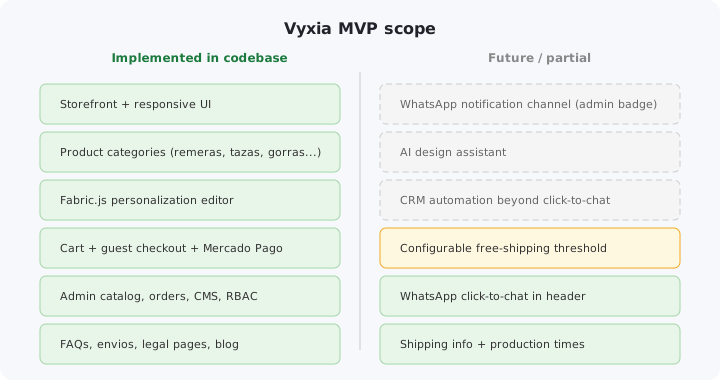
Siblings Software built the product architecture, storefront, editor path, checkout path, and admin control layer as one cohesive platform. Scope prioritization centered on user-critical behavior over peripheral functionality, so teams can learn from live usage and then extend the roadmap with evidence.
- Storefront routes with category-first product exploration
- Interactive product editor driven by Fabric.js
- Checkout and payment integration for real transactions
- Guest checkout to reduce friction for first-time buyers
- Admin routes with role-based control under
/admin/* - Operational settings including configurable free shipping threshold
Technical Stack
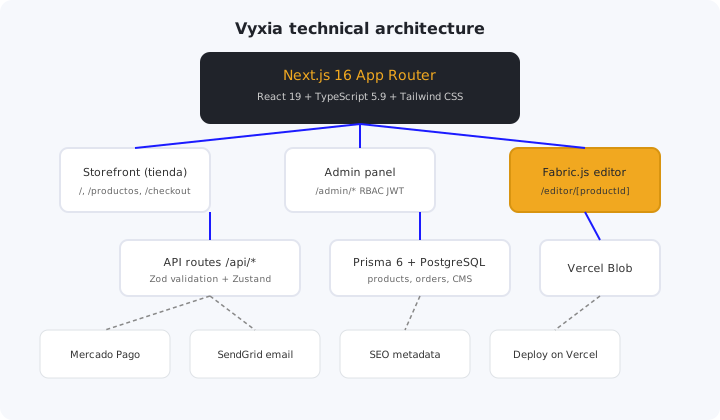
The implementation uses a modern full-stack web setup designed for production operations. Core technologies include Next.js 16.1.2 and React 19 with TypeScript for the application layer, Prisma 6 with PostgreSQL for data modeling and persistence, and Tailwind CSS for styling velocity and consistency. Product customization relies on Fabric.js, while Zustand supports client-side state where local interaction speed matters. Zod defines validation boundaries to keep input handling predictable across key routes.
The commerce backbone integrates Mercado Pago for transactions, SendGrid for transactional email workflows, and Vercel Blob for media asset storage. Deployment runs on Vercel, with framework and hosting patterns aligned with nextjs.org guidance and operational reference material from vercel.com/docs. Payment-specific behavior is integrated through Mercado Pago.
Key User Flows
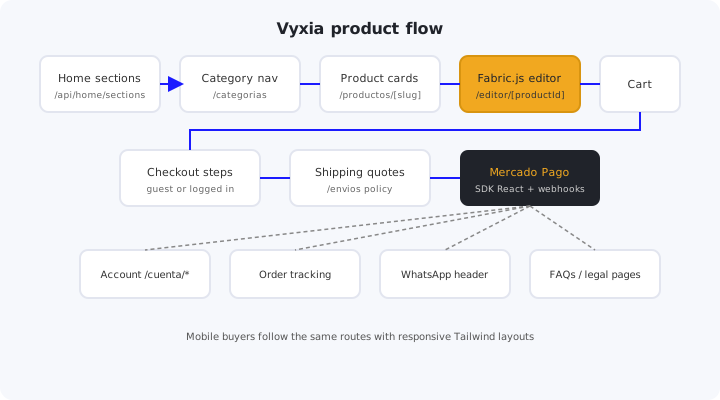
Vyxia was scoped around explicit route-level behavior rather than generic page templates. Core journeys include browsing products under /productos, entering personalization through /editor, completing payment at /checkout, and managing operations through role-gated admin routes in /admin/*. This route design supports clear ownership between buyer experience and internal controls.
Guest checkout is intentionally supported to lower initial friction. For businesses entering competitive product categories, this matters because first purchase speed often drives early retention patterns more than account complexity. The admin layer, in parallel, keeps rule management and catalog governance visible so business teams can iterate without creating hidden operational debt.
Design and UX
For personalized commerce, visual trust and interaction clarity are not optional. Buyers need confidence that what they configure is what they will receive. The UX therefore emphasizes straightforward navigation, focused editor controls, and clear checkout progression. Consistency in interface behavior across storefront and admin reduces training overhead for internal teams and keeps future feature work predictable.
The WhatsApp click-to-chat element in the header supports users who want quick clarification before payment. This channel is especially useful in customization-heavy purchases where sizing, print details, or fulfillment timelines can influence conversion decisions in real time.
Challenges and Tradeoffs
A core tradeoff in this product was balancing launch speed with structural quality. Over-optimizing for launch can produce brittle logic in editor and checkout paths. Over-optimizing for perfection can delay market learning. The chosen scope kept critical business flows production-ready while reserving non-essential automation and advanced merchandising capabilities for later phases.
Another tradeoff was integration depth. Payments, messaging, and media storage were integrated in a way that supports immediate operations, but abstraction layers remain open for future provider evolution. This is usually a healthier strategy for MVP commerce than trying to solve every hypothetical migration in phase one.
Why This Matters
For international and US buyers evaluating development partners, Vyxia provides a concrete benchmark: custom product delivery with clear stack accountability, realistic scope discipline, and operational readiness. Instead of abstract claims, this case offers technical and product-level evidence you can map to your own initiative. You can assess route design, checkout strategy, admin governance, and integration choices in one coherent implementation.
It also shows how Siblings Software approaches product development as a provider: identify the core buying journey, ship it with production intent, and preserve extension paths for the next roadmap layer. For commerce programs, that combination is often the difference between a launch that creates insight and a launch that creates rework.
What Could Come Next
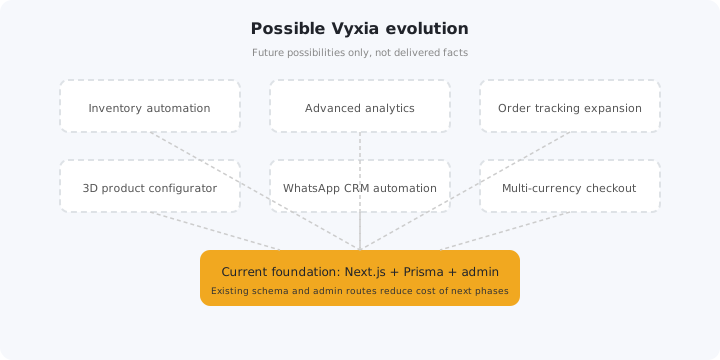
The MVP establishes a strong base for iterative expansion. Future increments can deepen conversion optimization, fulfillment orchestration, and merchandising intelligence while preserving the current architectural direction. Typical next steps include more advanced promotion logic, richer post-purchase communication, and additional analytics instrumentation across editor and checkout behavior.
Because the core stack is typed and modular, these additions can be staged without destabilizing the initial user journeys. That helps teams prioritize roadmap work using real transaction and behavior data from the live platform instead of assumptions.
Frequently Asked Questions
Six practical questions buyers ask when they evaluate this delivery model and technical setup.
Vyxia is a personalized products e-commerce platform. Siblings Software built the product experience from storefront to admin, including product exploration, customization, checkout, and operations routes designed for daily business use.
The stack uses Next.js 16.1.2, React 19, TypeScript, Prisma 6, PostgreSQL, Tailwind CSS, Fabric.js, Zustand, and Zod. Integrations include Mercado Pago for payments, SendGrid for transactional messaging, and Vercel Blob for media assets, with deployment on Vercel.
The MVP centers on /productos for discovery, /editor for customization, /checkout for transaction completion, and /admin/* for management operations. Guest checkout is included to reduce purchase friction from first visit.
The admin domain uses role-based access control and includes routes for catalog and operational governance. Teams can manage categories such as remeras, tazas, gorras, and fundas, and they can adjust a configurable free shipping threshold to support commercial strategy.
By prioritizing critical buyer and admin paths first, the team avoided both under-scoping and overbuilding. Typed boundaries, modular route structure, and practical integrations created a launch-ready product that can still evolve without major architectural reversal.
Evaluate technical fit, route-level product clarity, integration strategy, and admin governance. This case shows how Siblings Software executes custom commerce product development with evidence that can be compared directly to your own product requirements.
CTA: Discuss Your Custom Commerce Project
If you are evaluating partners for a personalized products platform, we can review your business goals, core journeys, and architecture options with the same practical lens used in this case. The objective is simple: define what should be in MVP, what should wait, and how to launch with product and operational confidence.
Siblings Software works with teams that need a product development provider capable of handling both implementation detail and strategic tradeoffs. If that is your current stage, contact us and we will map an actionable first phase.
For more similar cases from Argentina, visit the Argentina success case for this project.
CONTACT US
Last updated: July 2026