Hire Laravel Developers
Your product backlog is growing, and your in-house team is stretched thin. You need senior Laravel developers who understand Eloquent, queues, and real-world deployment—not juniors who learned the framework last month. We embed battle-tested nearshore engineers into your squad so you ship features faster without compromising architecture quality.
- Onboard experienced Laravel engineers in as few as 10 business days.
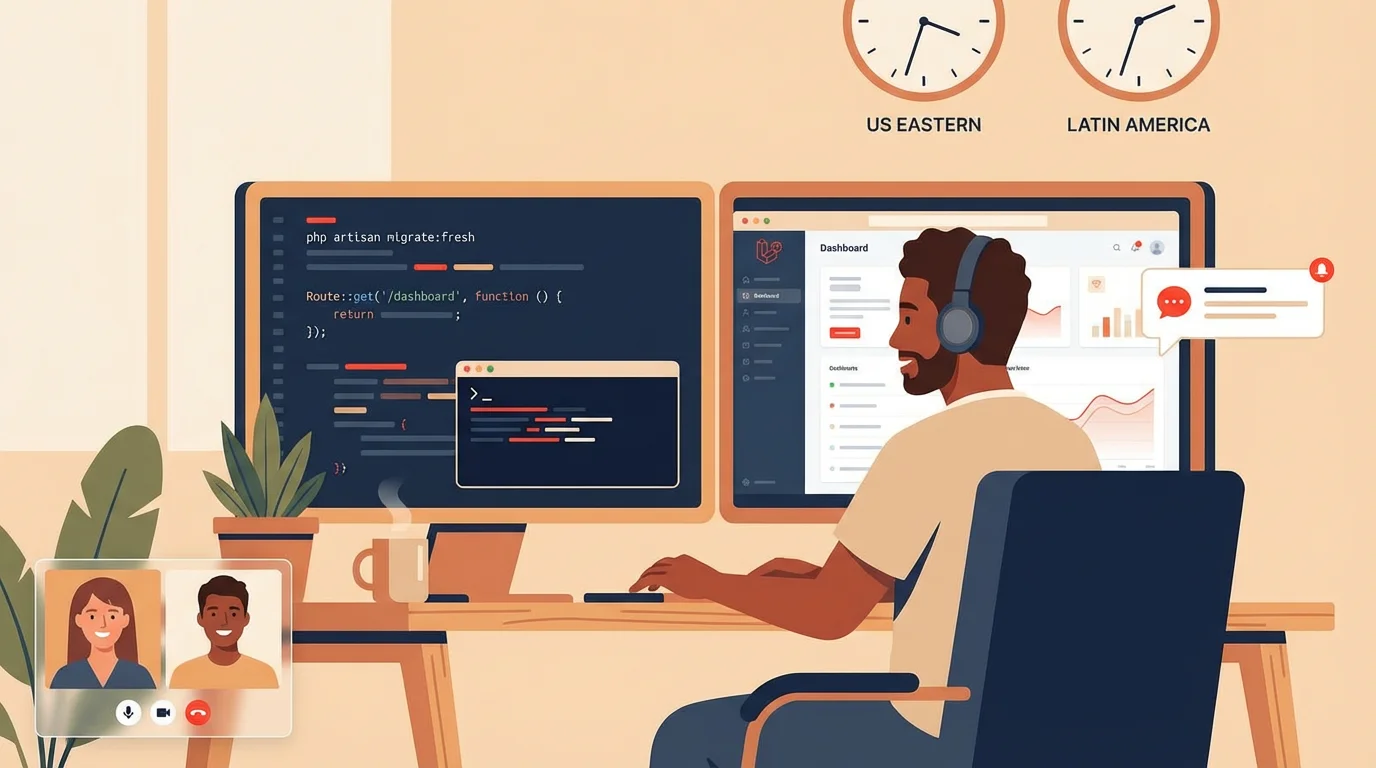
- Collaborate in real time—bilingual developers overlap 4–8 hours with US and Canadian time zones.
- Retain full IP ownership while we handle delivery, QA, and knowledge transfer.
Already running a broader PHP stack? Pair Laravel specialists with our PHP developers or JavaScript engineers to cover the full stack.
Prefer to outsource the entire project? Explore our PHP development outsourcing model.
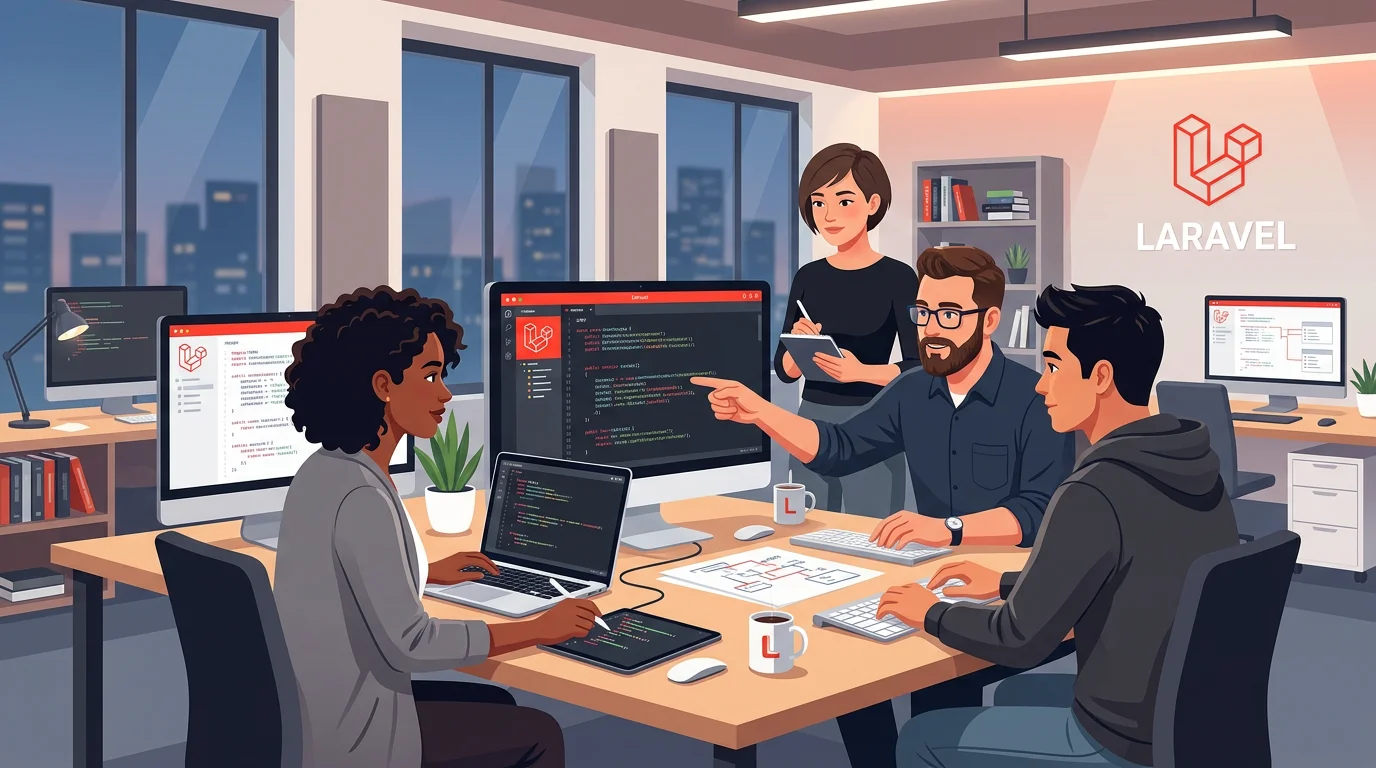
Why Laravel for Your Next Build?
Laravel is not just popular—it solves real engineering problems that slow product teams down.
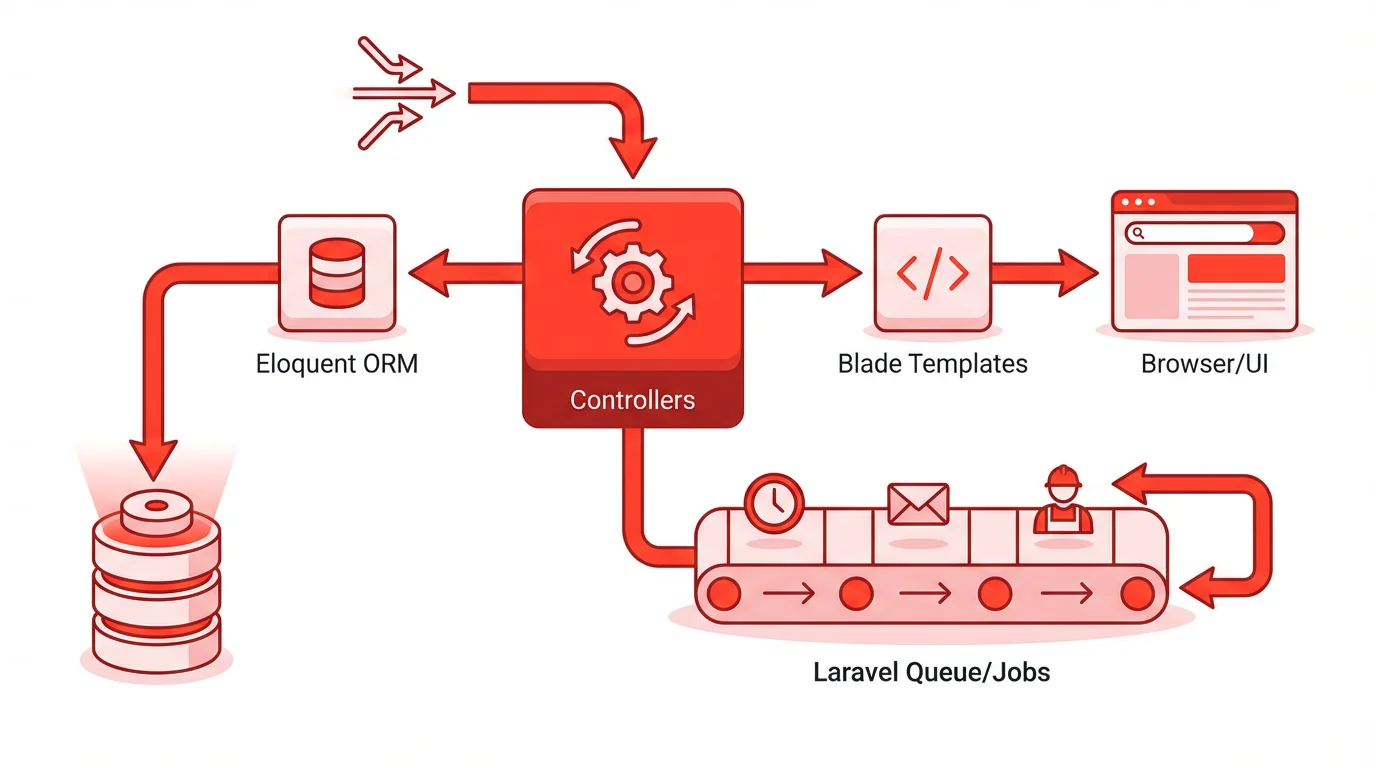
Since Taylor Otwell released version 1.0 back in 2011, Laravel has grown into the most widely adopted PHP framework on the planet. It is not hard to see why. Laravel ships with an elegant ORM (Eloquent), a powerful templating engine (Blade), first-class queue support, built-in authentication scaffolding, and a thriving package ecosystem curated through Packagist.
But the framework alone is not enough. You need developers who know when to reach for a repository pattern versus a simple controller, how to tune Horizon for high-throughput queue workloads, and why a well-structured FormRequest prevents more bugs than any linter. That is the level of expertise we bring to every engagement.
Our Laravel engineers have shipped SaaS platforms, marketplace backends, healthcare portals, and logistics dashboards—each with distinct scaling, compliance, and integration requirements. They know how to make pragmatic architecture decisions under real deadlines.
Eloquent Mastery
Our developers write expressive, performant queries. They know when to eager-load relationships, how to avoid the N+1 trap, and when raw SQL is the pragmatic choice over an ORM abstraction.
Queue-Driven Architecture
From email dispatches to report generation, our engineers design job pipelines that keep your response times fast. They configure Horizon dashboards, implement retry logic, and monitor failed jobs before users notice.
API-First Mindset
Whether you need a RESTful JSON API for a mobile app or a GraphQL layer for a React SPA, our Laravel engineers structure resources, transformers, and authentication flows that third-party consumers trust.
Laravel Staff Augmentation That Feels In-House
We plug into your standups, your CI pipeline, and your product vision—no hand-holding required.
How we typically deliver
- Building multi-tenant SaaS platforms with role-based access, subscription billing via Laravel Cashier, and white-label theming.
- Designing event-driven microservices that communicate through Laravel queues and webhooks.
- Migrating monolithic PHP applications to modular Laravel packages with zero-downtime deployments.
- Integrating third-party systems—payment gateways, shipping APIs, ERP connectors—behind clean service layers.
How collaboration works
- Discovery workshop and codebase review
- Curated shortlist of Laravel candidates within 5 business days
- Your interviews, our technical vetting, one blended decision
- Pilot sprint with explicit success metrics and retrospective
Delivery managers stay involved after onboarding—monitoring velocity, clearing blockers, and running health checks every sprint.
Why teams choose Siblings Software for Laravel
- 10–14 days average time-to-team for Laravel roles
- 94% of our Laravel engineers have contributed to open-source packages or Laracasts discussions
- 4-hour overlap minimum with EST and PST product teams
- Pest & PHPUnit test coverage expected on every pull request
Source: internal delivery metrics, updated Q1 2026.
Case Study: MedBooking—A Healthcare SaaS Platform
Replacing a fragile scheduling system without disrupting 1,200 active clinics.
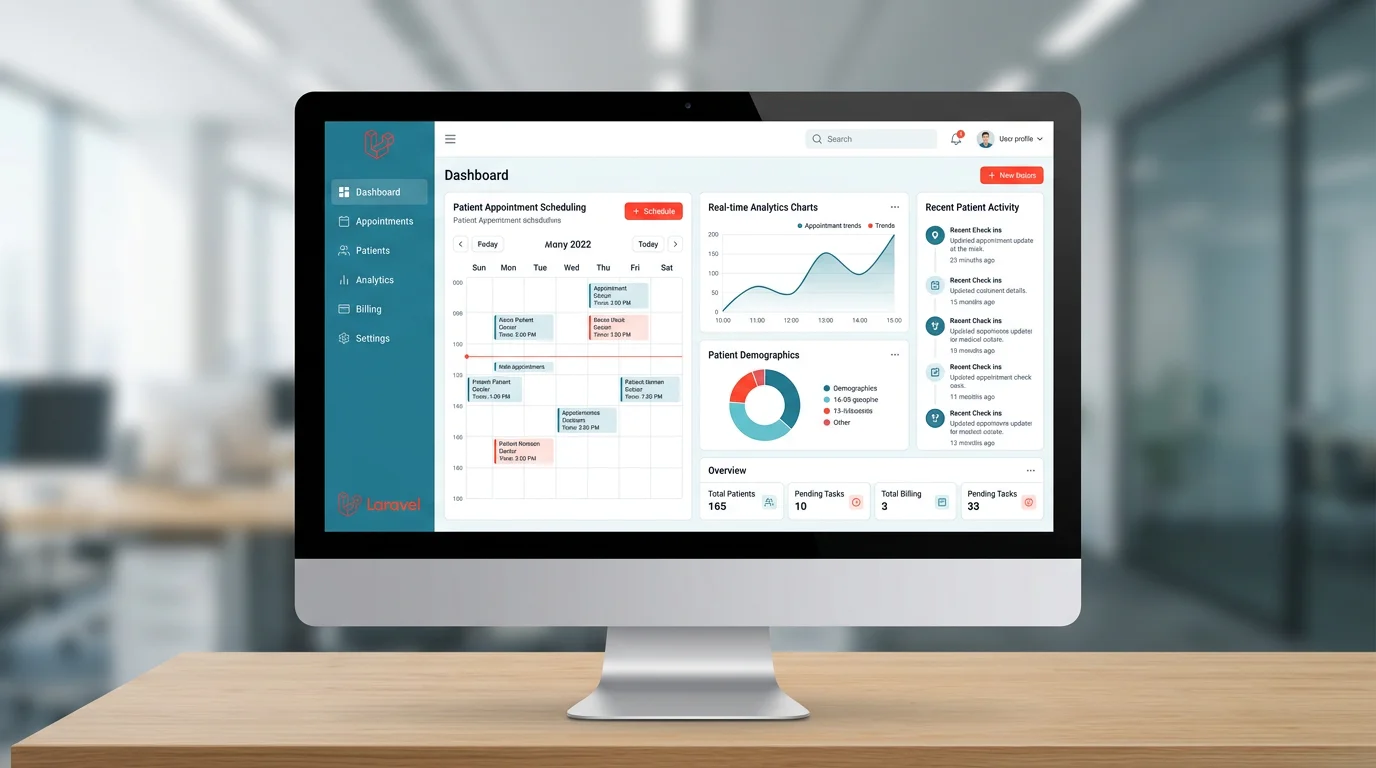
A mid-market health-tech company in the southeastern United States operated a patient scheduling platform built on a custom PHP 5.6 codebase. Every feature request took weeks because the code was tightly coupled, untested, and deployed manually via FTP. Their CTO needed to modernize the stack while keeping the existing clinics running without interruption.
We embedded two senior Laravel engineers and one QA automation specialist into their five-person product team. Over twelve weeks, the blended squad:
- Wrapped legacy modules behind Laravel service providers, allowing incremental migration without a full rewrite.
- Introduced Eloquent models with relationship scoping that reduced average API response time from 1.8 seconds to 320 milliseconds.
- Set up Laravel Horizon to process appointment reminders, insurance verification callbacks, and PDF report generation asynchronously.
- Built a CI/CD pipeline using GitHub Actions and Laravel Forge with automated Pest test suites gating every deploy.
82%
faster API responses
Zero
downtime during migration
3x
feature velocity by week 8
Want more examples? Browse our software case studies for outcomes across different industries.
Sample Laravel profiles you can add
Senior Laravel Architect
12 years exp · Eloquent, Horizon, Vapor, multi-tenancy · mentors mid-level engineers on code review.
Laravel API Specialist
9 years exp · RESTful & GraphQL APIs, Passport/Sanctum auth, rate limiting, versioning strategies.
Full-Stack Laravel + Vue Engineer
7 years exp · Inertia.js, Livewire, Tailwind CSS, end-to-end testing with Cypress.
All profiles include English proficiency assessments and background checks.
Where Laravel Augmentation Makes the Biggest Impact
SaaS Product Teams
Accelerate release cycles for subscription platforms, booking engines, and internal tools. Our Laravel developers fit into sprint planning, roadmap reviews, and release trains—shipping tested features every two weeks.
E-commerce & Marketplace Backends
Bring in developers who understand catalog management, order orchestration, and payment integration within Laravel. Perfect for brands scaling beyond off-the-shelf platforms and needing custom checkout flows or headless commerce layers.
Legacy PHP Modernization
Upgrade from aging PHP 5.x codebases or custom frameworks to modern Laravel with automated tests, CI/CD, and observability. We handle refactoring while your core team keeps shipping features to production.
We bring accelerators for Laravel Vapor serverless deployments and Laracasts-informed best practices, plus playbooks for collaborative delivery with internal engineering leaders.
Laravel vs. Other PHP Frameworks—When Does Laravel Win?
We are framework-agnostic, but we have seen Laravel excel in specific scenarios.
Laravel is not always the right choice. If your project is a lightweight microservice with minimal routing, something like Slim or Lumen might be leaner. If your team already has deep Symfony expertise, switching frameworks mid-project rarely pays off. But when you are building a data-rich web application with complex business logic, authentication requirements, background processing, and API consumers—Laravel is hard to beat.
Laravel shines when
- You need rapid prototyping with built-in auth, mail, queues, and notifications
- Your app relies on complex database relationships managed through an expressive ORM
- You want serverless deployment without managing infrastructure (Laravel Vapor)
- Your front-end team prefers Inertia.js or Livewire for seamless SPA-like experiences
- You value a massive community and package ecosystem for common integrations
Consider alternatives when
- Your team already has deep Symfony expertise and a mature codebase
- You are building a minimal API with no ORM, no templating, no background jobs
- Strict enterprise compliance requires a framework your security team has pre-approved
- You need a non-PHP runtime (Node.js, Python, Go) for performance or team skill reasons
- The project is purely a static site or a JAMstack build
Not sure which path fits? Our PHP developers page covers broader PHP ecosystem expertise, and our back-end developer augmentation page explains how we match engineers to any server-side technology.
OUR STANDARDS
Laravel craftsmanship backed by transparent delivery.
PSR-12 & Pint-enforced code
Every pull request passes automated style checks through Laravel Pint and static analysis via Larastan. Technical debt stays visible and manageable from the first commit.
Delivery analytics
Velocity dashboards and burn-up charts shared weekly so you can spot bottlenecks before they delay a release. We track cycle time, deployment frequency, and change failure rate.
Shared playbooks
Every engagement includes runbooks, onboarding guides, and pair programming sessions. When engineers rotate off, your team retains the knowledge—not just the code.
Test-first culture
Feature branches include Pest or PHPUnit tests for models, controllers, and critical user flows. Tests are not an afterthought—they gate deployments and protect against regressions.
Infrastructure as code
We provision staging and production environments with Forge, Vapor, or Docker Compose—whichever fits your ops culture. No snowflake servers, no undocumented configurations.
Security by default
Our engineers follow OWASP guidelines, use Laravel's built-in CSRF protection, input validation, and encryption, and audit third-party packages for known vulnerabilities before adoption.
From compliance-ready healthcare platforms to high-traffic marketplace backends, we treat every Laravel engagement like a long-term partnership. That means investing in knowledge transfer, test coverage, and honest communication—so your team stays confident long after launch.
CONTACT US
Get in touch and build your idea today.